| Item or observation | What to investigate | Limit or caution |
|---|---|---|
| Passive loudspeaker | External power amplifier | Usually divides the amplified signal inside the speaker |
| Active loudspeaker | Amplification arranged for the driver bands | Crossover operates before the power stages |
| Powered speaker | Amplification included somewhere in the system | The label alone does not establish crossover topology |
1.Two questions are often mixed together
“Does it contain an amplifier?” and “Where does its crossover operate?” are related questions, but they are not interchangeable. A conventional passive loudspeaker receives an already amplified signal. Its passive crossover distributes that signal among the drivers. An active design divides the signal before the power-amplifier stages that drive the relevant frequency bands.
In everyday product language, “active” and “powered” are sometimes used loosely. A powered pair may contain an amplifier in one cabinet and send an amplified signal to the other. A different pair may put dedicated amplification and filtering in each cabinet. Read the connection diagram or technical description rather than inferring the architecture from a mains socket.

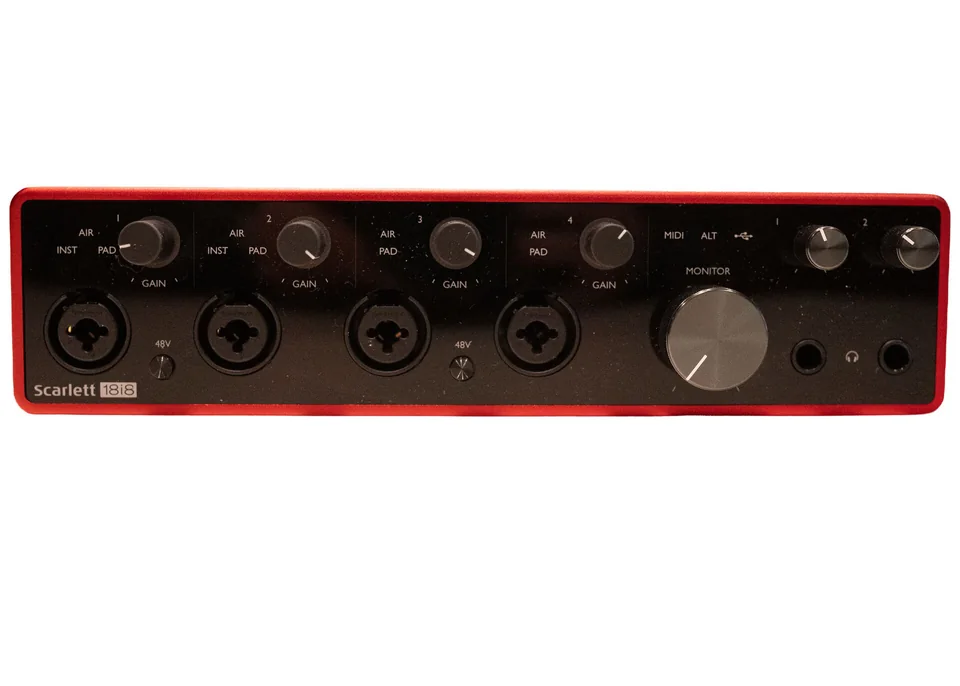
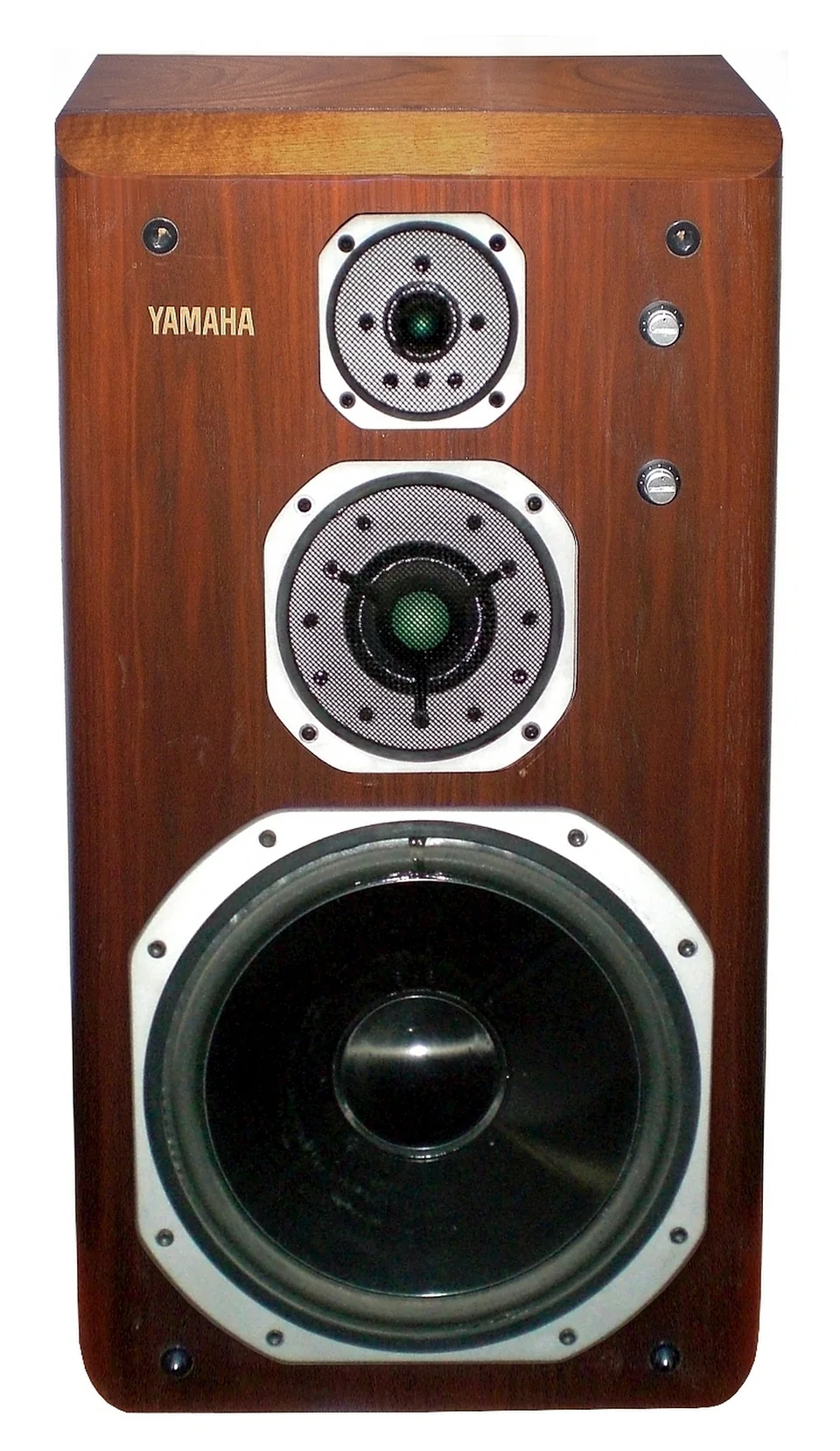
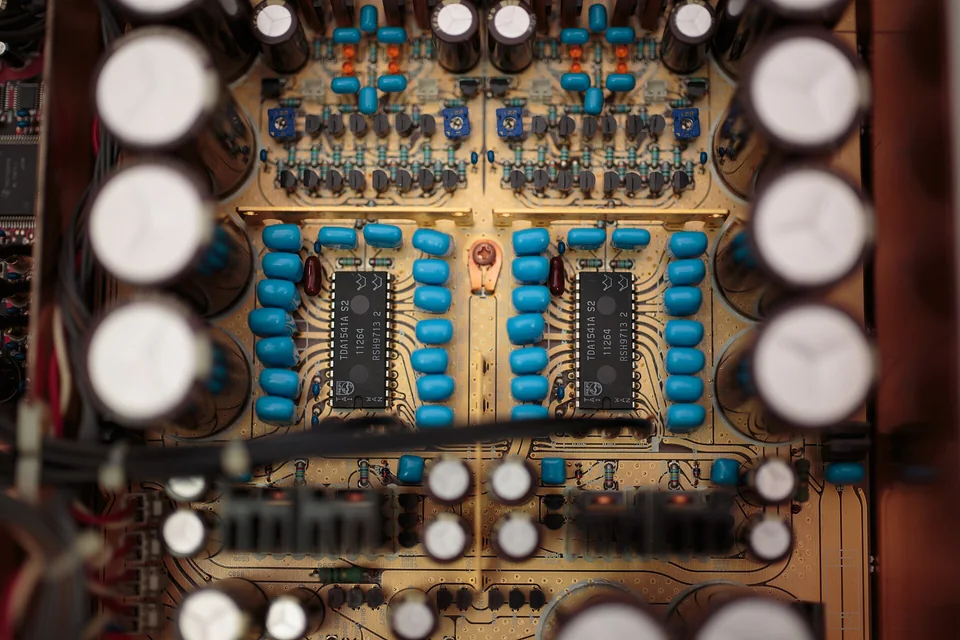
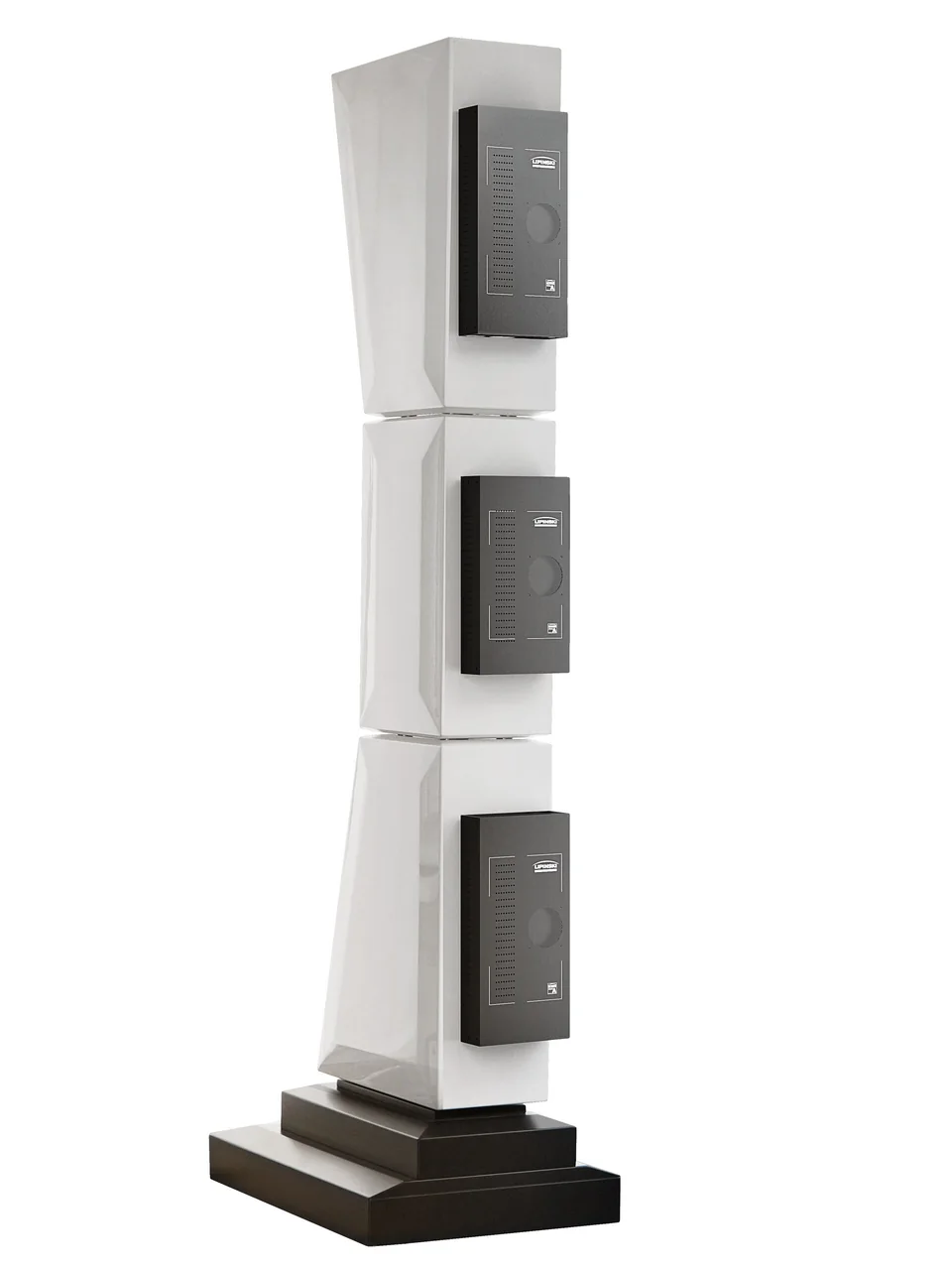
Shows powered loudspeaker formats; actual crossover architecture must be checked in documentation, not inferred from a photo. Reference photography, not a SOUND & ROOM test or measurement.
2.What changes when the crossover comes first?
An active crossover can be implemented with analog circuitry or digital processing. After the frequency bands are separated, the relevant amplifier stages drive their assigned transducers. This arrangement gives the designer opportunities to coordinate filtering, protection, equalization and driver behavior as a system. It does not guarantee that every implementation uses those opportunities equally well.
A passive system places more of the amplifier choice outside the loudspeaker. That can make replacement or reconfiguration straightforward, but the chosen amplifier still needs to suit the load and required output. Neither architecture provides a shortcut around response, directivity, noise, distortion or output measurements. A topology describes how a system works; quality requires evidence about a particular implementation.
To put those functions in a complete system map, follow Bookshelf vs Floorstanding Speakers: Which Fits Your Room?.
(1)A practical decision path
- 1
Define the task
Find the crossover and amplification stages, then confirm input level and volume control. A power cord alone does not describe the internal design.
- 2
Check the distinction
Passive loudspeaker: External power amplifier: Usually divides the amplified signal inside the speaker
- 3
Preserve the evidence
Plan power outlets and service access.
3.Count the functions before counting the boxes
List the source, input selection, volume control, any conversion or processing, power amplification and loudspeakers. Some active speakers include source switching, streaming and a remote volume control. Others expect a separate controller and accept only a limited set of inputs. A passive pair may be connected to an integrated amplifier that performs several jobs in one enclosure.
The supposedly simpler option can become more complicated when a missing function is discovered later. For example, two professional active monitors with fixed input sensitivity do not necessarily provide a convenient shared volume control for a television. That is a routing and control problem, not proof that active speakers are unsuitable for home use. Draw the intended chain and assign each function to an actual device.
4.Connection level matters more than connector familiarity
An RCA connector normally suggests a line-level audio connection in this context, while binding posts commonly carry the output intended for passive speakers. Those conventions do not replace labels and manuals. A power-amplifier output must not be connected to an ordinary line input simply because an adapter can be found.
Likewise, a powered speaker is not automatically designed to accept a receiver's speaker outputs. Some products provide specifically engineered high-level inputs; many do not. Confirm the permitted input type and use the documented path. Turn equipment off before changing speaker wiring, and start playback with the relevant volume controls low. Adapters change connector shape, not necessarily electrical compatibility.
5.Noise and gain need a system-level check
The relationship between source output, controller range and speaker sensitivity affects practical usability. If a system reaches its usual listening level within a tiny part of the volume control's travel, operation may be awkward. If the source is too weak, the opposite problem can occur. Adjustable input sensitivity can help, but its meaning and range should be checked in the manual.
Audible hiss from a close listening position also needs context. Determine whether it remains when the input is disconnected according to the manufacturer's procedure, and distinguish constant background noise from a signal-dependent fault. Do not assume that replacing a digital source will fix noise produced farther down the chain. The location of the noise helps identify which stage deserves investigation.
6.Installation includes mains power and future service
An active arrangement may require mains power near both speakers as well as signal cables. A passive arrangement needs speaker cables from the amplifier, which may be easier or harder to route in a particular room. Plan around actual sockets, furniture movement and ventilation rather than idealized cable-free photographs.
Service strategy differs too. Separate components may let an owner replace one function independently; an integrated system may reduce compatibility decisions but tie several functions to one product's support life. This is a practical tradeoff, not a prediction that one architecture lasts longer. Ask what can be serviced, what remains usable without a network service, and how the system behaves when a source changes.
7.Compare finished systems on the same job
For a desk, compare the complete source-to-speaker chain and the available volume control. For a living room, add television integration, remote operation and the required listening area. For either, assess documented output and response rather than total advertised watts across differently configured amplifiers.
The right conclusion may be that both architectures can solve the problem, with different installation and control requirements. Once the crossover location and connection levels are understood, the labels become useful. Until then, “active versus passive” can conceal the more important question: whether the finished system does every job the room and listener require.
8.Key terms and common questions
(1)A question worth checking
Is every speaker with a power cable active?
A power cable establishes a power requirement. The internal signal routing must establish whether the design uses an active crossover or a different powered arrangement.
9.Technical references and editorial scope
Research-based educational guidance. Sources support fact checking; they are not text to reproduce. No original measurements or hands-on product test are claimed. Follow the instructions for your equipment. Our editorial and corrections policy.
Have a question or spotted a correction? Write to the editors ↗