A question worth checking
Will a separate DAC always improve sound?
No. It can solve a specific interface, noise or functionality problem, but an audible improvement requires evidence about the actual devices and comparison conditions.
1.Where does conversion happen now?
A digital-to-analog converter turns a digital audio representation into an analog electrical signal. That analog signal still needs the appropriate downstream stages before a passive loudspeaker can produce useful sound. A DAC is therefore a function in a chain, not a complete description of a playback system.
Many everyday products already contain that function: receivers, televisions, phones, digital-input active speakers and other integrated devices. Draw the path from the selected source to the speakers and mark where the signal becomes analog. If the system already plays a digital source through analog amplification, conversion is happening somewhere. The question is whether the present implementation lacks a needed capability or has an identified problem.
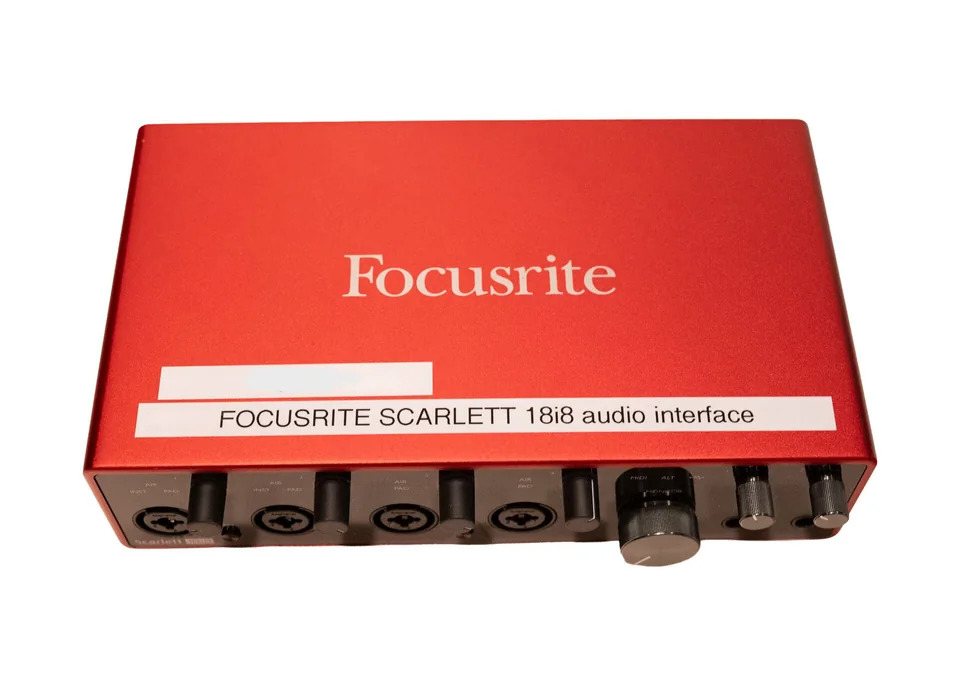
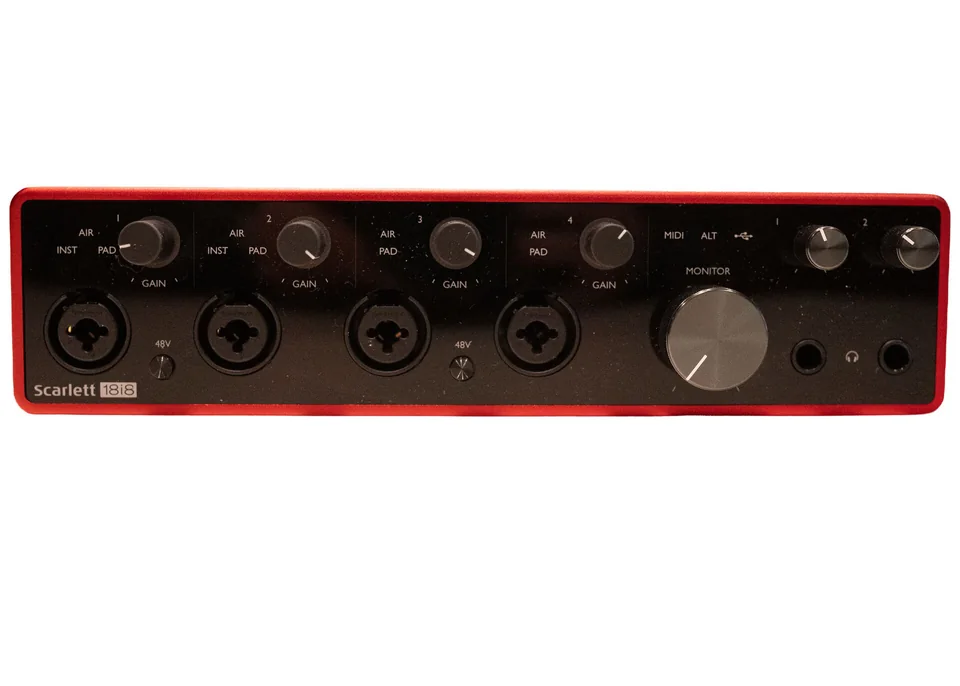
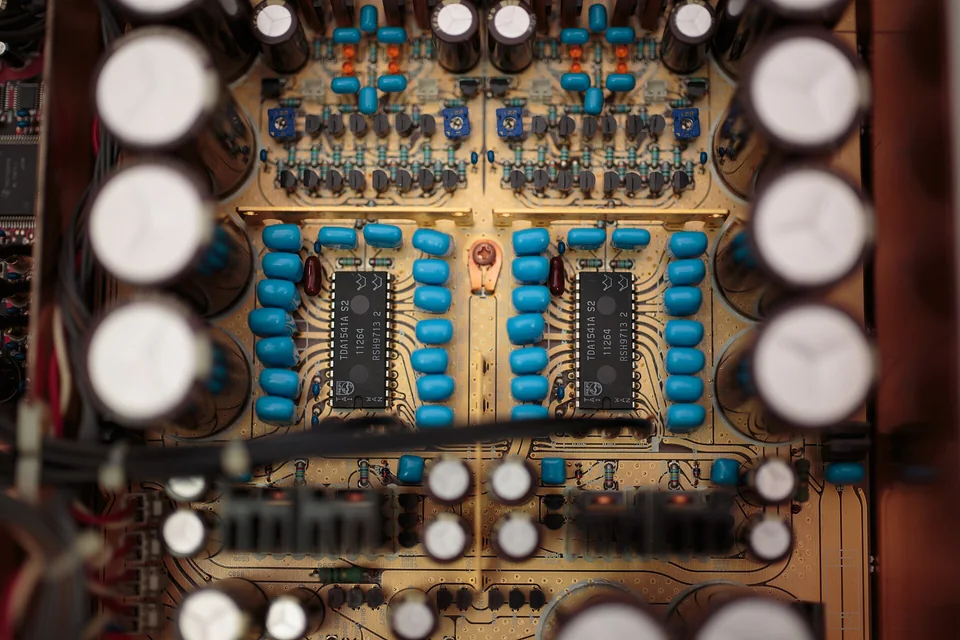
Shows a DAC board and a separate audio interface; component photographs do not prove audible improvements. Reference photography, not a SOUND & ROOM test or measurement.
2.Is a DAC also an amplifier?
Some products combine conversion with a headphone amplifier, preamplifier, volume control or source switching. Others provide a fixed line-level output intended for a separate control stage. The label DAC does not establish which of those functions is included.
This distinction matters before connecting active speakers or a power amplifier. A fixed high-level line output may not provide a safe, convenient everyday volume control for the downstream arrangement. Check output behavior, startup state and the intended connection procedure. Similarly, a line output is not a speaker output; it cannot directly drive an ordinary passive loudspeaker merely because an adapter exists.
For digital-input and analog-input speaker architectures, compare Audio Signal Chain Explained: From Source to Speakers.
| Item or observation | What to investigate | Limit or caution |
|---|---|---|
| Digital source to analog amplifier | Conversion is needed somewhere before that analog input | A separate DAC may provide the required interface |
| Digital source to receiver | The receiver may already provide conversion | An extra box may duplicate an existing function |
| Source to digital-input active speakers | Conversion may occur within the speaker system | An external analog route may be unnecessary |
3.Which connection problem can a separate unit solve?
A separate converter can provide a compatible bridge when a source offers a digital output but the chosen amplifier accepts an appropriate analog input. It may also add useful input switching, accessible control or a required output connection. Those are concrete reasons that can be checked before purchase or installation.
Confirm the actual digital format, not just the connector. A DAC intended for stereo PCM may not decode a television's compressed multichannel output. Source settings and supported rates must match the input. USB behavior also depends on the host and device implementation. An input socket with the right shape is the beginning of the compatibility check, not its completion.
4.Can it fix noise?
First identify the symptom. Constant hiss, mains-related hum, intermittent interference and distortion on loud passages may originate at different stages. If the noise remains with a downstream input isolated according to the equipment instructions, changing a digital converter upstream may not address it.
A different connection arrangement can sometimes alter a noise path, but that should be tested as a system observation rather than attributed automatically to conversion quality. Keep signal level and routing under control. Never defeat protective earth to investigate hum. If there is unusual electrical behavior, stop using the equipment and obtain appropriate service instead of experimenting with mains modifications.
5.Do higher supported rates guarantee a better result?
Format support tells you what a device can accept under stated conditions. It does not independently establish analog output quality, noise, distortion or an audible difference in the intended use. A headline rate may be irrelevant if the actual source and processing path use a different format.
Likewise, a comparison between two devices can be biased by output-level differences. If one is slightly louder, it may be preferred for reasons unrelated to the converter architecture. A meaningful listening comparison needs compatible routing, carefully matched levels and a clear question. Without that control, describe an impression cautiously rather than claiming that a format label caused an improvement.
6.Could the signal be converted again later?
An analog input feeding a device with digital processing may pass through an analog-to-digital stage before conversion back to analog farther along. Whether that happens depends on the specific signal path and operating mode. Read the documentation instead of assuming that adding an external DAC bypasses all internal conversion.
That additional stage is not automatically a practical problem, nor is an all-analog route automatically preferable for every task. It may enable useful processing or bass management. The point is to understand the actual route so that an intended simplification does not unknowingly duplicate functions. A diagram is more informative than the total number of converters in a system.
7.What is a good reason to leave the system alone?
If the existing system provides the needed inputs, suitable control, compatible formats and no identified audible fault, a separate converter may have no clear job. Curiosity can still motivate a careful comparison, but it should not be described as a necessary repair to an otherwise complete signal chain.
Write the proposed improvement in a testable sentence: add a missing optical input, provide a convenient controlled output, or investigate a documented noise issue. Then assess whether the proposed unit actually performs that function. This keeps conversion in its proper role: an essential technical step whose implementation matters, rather than an automatic invitation to add another box.
8.Key terms and common questions
(1)Checks to keep the comparison useful
- Identify where the digital signal becomes analog.
- Check input format and sample-rate support in the manual.
- Separate conversion from volume control and amplification.
- Define the missing function before adding a component.
9.Technical references and editorial scope
Research-based educational guidance. Sources support fact checking; they are not text to reproduce. No original measurements or hands-on product test are claimed. Follow the instructions for your equipment. Our editorial and corrections policy.
Have a question or spotted a correction? Write to the editors ↗