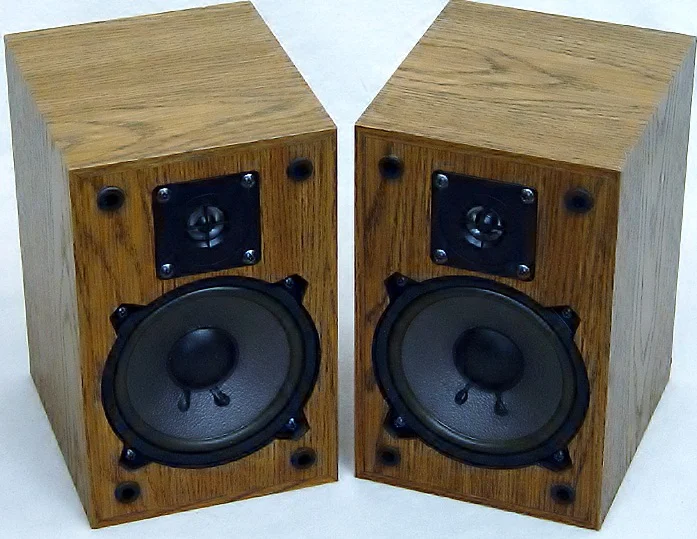
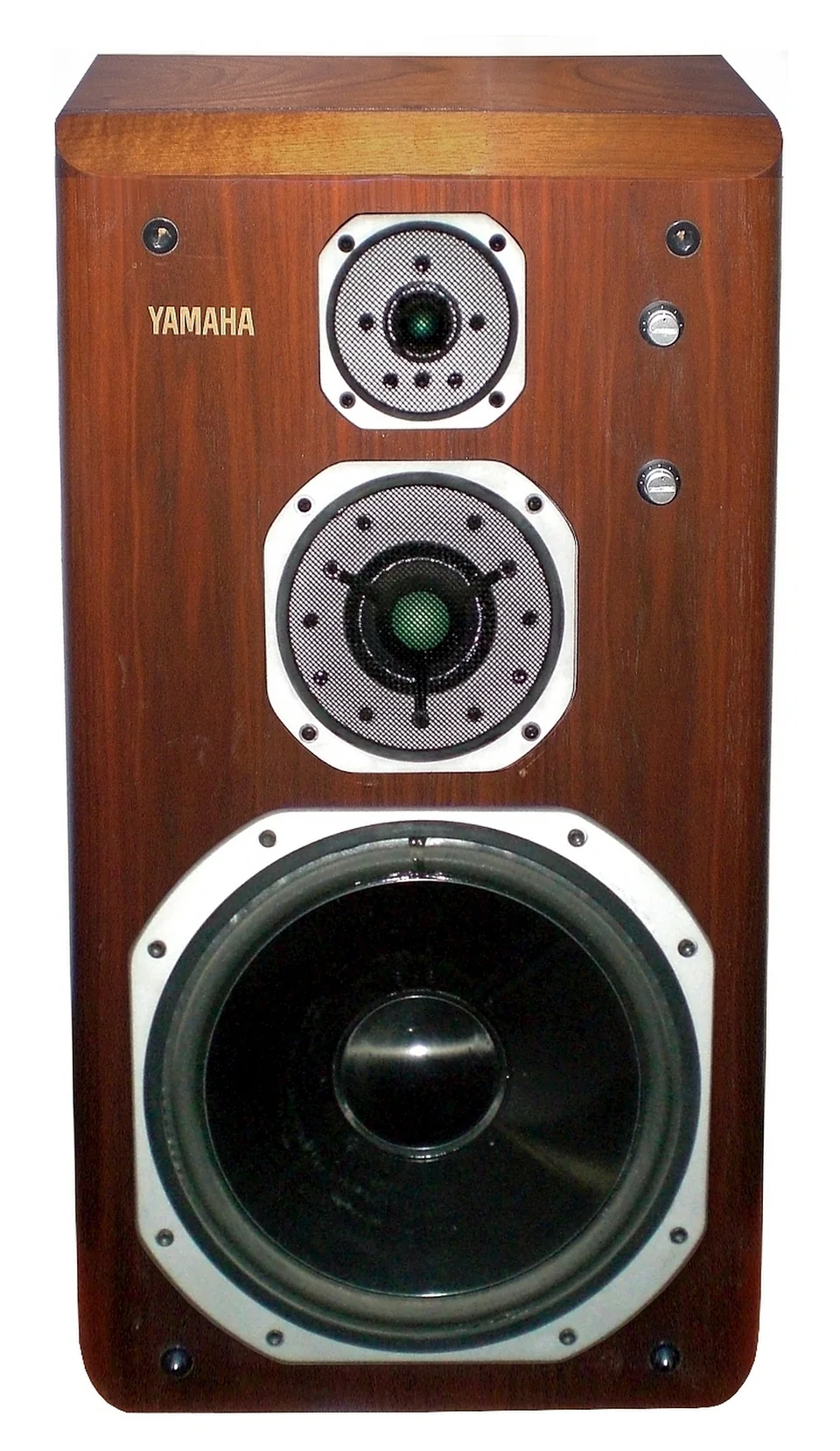
| Your constraint | Bookshelf option | Floorstanding option |
|---|---|---|
| Limited usable floor space | Include stand base and cable clearance | Measure base and required clearance; compare complete footprints |
| Subwoofer already planned | Check output above the intended crossover | Extra bass capacity may be useful, but does not remove integration checks |
| Longer distance or higher listening level | Look for documented clean output; size alone cannot decide | Greater driver area may help, depending on the design |
| Fixed total budget | Include stands, amplification and any subwoofer | Include supports, amplification and any required bass support |
1.Start with the system, not the silhouette
Bookshelf speakers suit a compact system when their documented output meets your listening needs and there is room for suitable supports. Floorstanding speakers can offer more bass extension or output, depending on the design, but need a workable position too. Neither format is automatically better for a small room, and stands can make a compact pair occupy as much floor space as towers.
Compare the full installation: stand or base, wall clearance, listening distance, desired level and whether a subwoofer will handle deep bass. Include supports and any required amplification in the budget. Once you have chosen the compact format, the linked bookshelf-speaker worksheet covers model shortlisting, cable clearance and amplifier checks. This page focuses on choosing between the two formats.
(1)A shared-room choice
One option is a compact pair with stands and separately managed bass. Another is a suitable floorstanding pair. Compare their complete footprints and capabilities before choosing. This is an illustrative scenario, not a reported test.
2.A larger cabinet creates opportunities, not guarantees
More enclosure volume and additional radiating area can give a designer room to pursue deeper bass or greater output. That opportunity may be spent differently. One design may emphasize extension, another sensitivity, another compactness relative to its intended application. Tuning, driver excursion, port behavior and protection also matter. A tall cabinet is not a measurement of any of them.
Compare a published frequency range only when its tolerance and measurement conditions are stated. A response described as reaching a particular frequency without a level reference is incomplete. Also look for output-dependent behavior. A speaker that reproduces a low note quietly may not reproduce it cleanly at the level needed across a large seating area. Extension and usable output belong in separate columns of your notes.
If you have decided on compact speakers, use How to Choose Bookshelf Speakers That Fit Your Room.
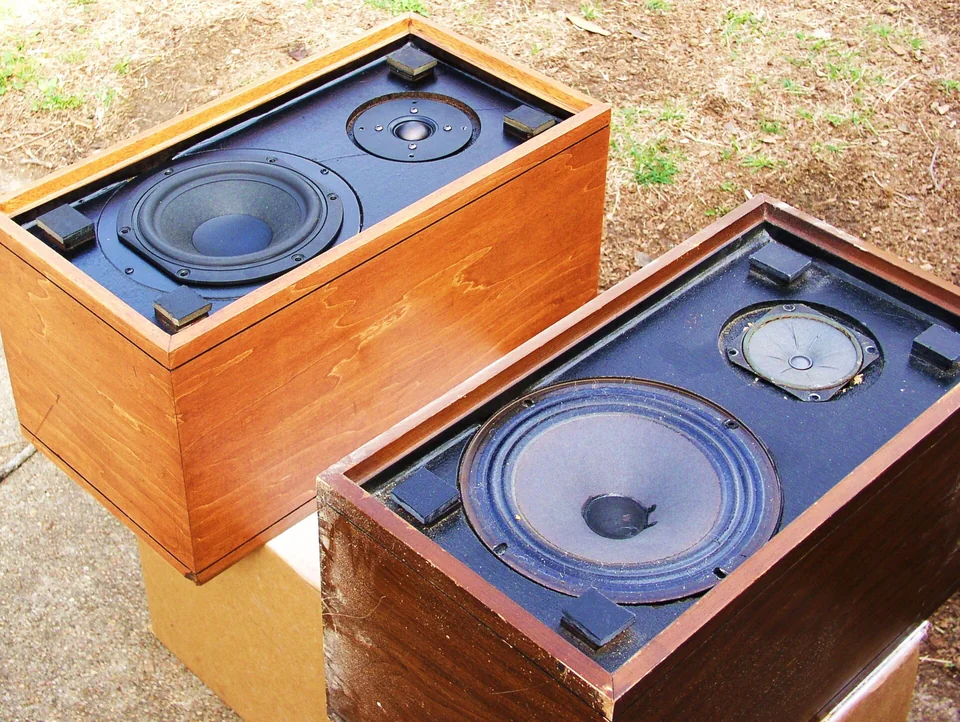
Contrasts a tall multi-driver cabinet with a pair of compact/passive cabinets; it does not rank the photographed products. Reference photography, not a SOUND & ROOM test or measurement.
3.A stand is part of a bookshelf installation
The name “bookshelf” describes a broad product class, not a promise that every model belongs inside a shelf. A recess can put nearby surfaces around the speaker, obstruct ports or place the acoustic axis far from seated ear height. The installation instructions should decide whether shelf placement is appropriate. A secure stand may provide a better starting arrangement, but it adds cost, floor space and cable-routing considerations.
Measure the whole arrangement before choosing. Include the stand base, required wall clearance and the distance a speaker would protrude into a walkway. If children or pets share the room, stability deserves attention for both formats. A tall floorstander is not automatically tip-proof, and a small speaker balanced on furniture is not a substitute for a suitable support.
For the amplification and connection choice, read Active vs Passive Speakers: What Does Your System Need?.
4.A subwoofer changes the comparison
With bass management, a subwoofer can take over part of the low-frequency workload while the main speakers reproduce the remaining range. That can make a compact main speaker practical in circumstances where full-range operation would be demanding. It does not erase the main speaker's output limit above the crossover, and the handover still needs to be configured correctly.
Larger speakers can also be used with a subwoofer. Their purpose may be greater output around the handover region, different directivity or simply a suitable combination of capabilities. Conversely, adding a subwoofer to small speakers does not guarantee an easier setup: the sub needs a workable location, a compatible signal path and integration checks. Compare complete systems rather than assuming that one format includes bass and the other does not.
5.Listening distance changes the demand
A system used from a nearby desk is not solving the same problem as one serving several seats across a living room. Distance, programme dynamics and desired playback level affect required output. Room reflections complicate simple free-field estimates, so a single calculator should not be treated as a prediction of an entire domestic sound field.
Write the actual use case in plain language: two listeners at modest levels, a wide couch for films, or a desk where the listener sits close. Then investigate the models' documented capabilities. Sensitivity, impedance and amplifier suitability help establish electrical demands, but none independently establishes maximum clean output. Avoid replacing those questions with a rule that a particular room size always requires towers.
6.Compare placement freedom and coverage
A smaller enclosure may be easier to move during setup. A floorstander may put its drivers near a useful height without a separate stand. Neither advantage guarantees that the response remains consistent as listeners move sideways or stand up. Driver arrangement, crossover and directivity determine much of that behavior.
If published off-axis measurements are available, examine them alongside the on-axis response. A narrow listening area may be acceptable for one seat and frustrating for a family couch. In a physical comparison, keep the listening position and level as consistent as practical, and note whether the result changes across seats. A stronger bass impression at one position may come from room interaction rather than a universally better loudspeaker.
7.Make a decision you can explain
Imagine a shared room where the speaker positions are fixed but a subwoofer can go near a different wall. Compact speakers on secure stands might provide a practical arrangement with separate control of deep bass. In another room, suitable floorstanders might meet output needs with fewer boxes. These are planning examples, not reports of listening tests.
The decision becomes clearer when each option has a complete footprint, a bass strategy and an output requirement attached. Keep any uncertainty visible: missing measurements, an untested shelf location or an unknown amplifier load. Choose the arrangement whose documented capabilities and physical requirements fit the room. The cabinet format is useful shorthand at the beginning of that process, not a verdict at its end.
8.Key terms and common questions
(1)Checks to keep the comparison useful
- Include stands in the floor-space comparison.
- Decide whether a subwoofer will handle deep bass.
- Check listening distance and required output separately.
- Compare measurements made under compatible conditions.
(2)A question worth checking
Do floorstanders remove the need for a subwoofer?
Not automatically. Deep extension, clean output and even bass across seats are separate requirements. A larger main speaker may improve one without solving the others.
9.Technical references and editorial scope
Research-based educational guidance. Sources support fact checking; they are not text to reproduce. No original measurements or hands-on product test are claimed. Follow the instructions for your equipment. Our editorial and corrections policy.
Have a question or spotted a correction? Write to the editors ↗