| Evidence type | Can help establish | Does not automatically establish |
|---|---|---|
| Manufacturer manual | Supported connections, settings and intended operation | Independent verification of every performance claim |
| Published measurement | A result obtained under a particular documented method | Performance in every room or use case |
| Listening report | An experience in a stated system and context | A universal result or an undocumented measurement |
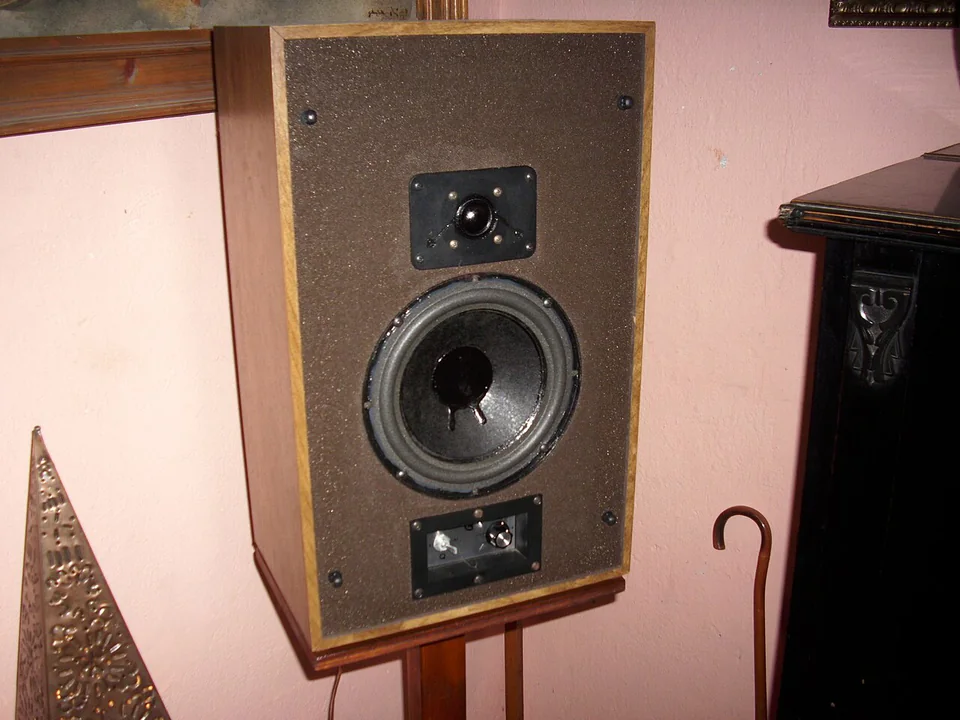
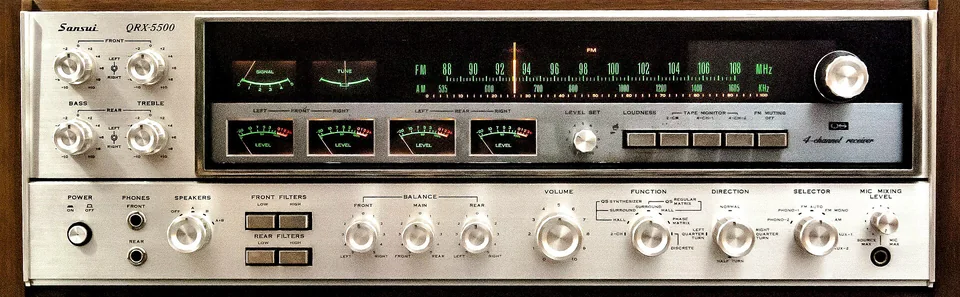
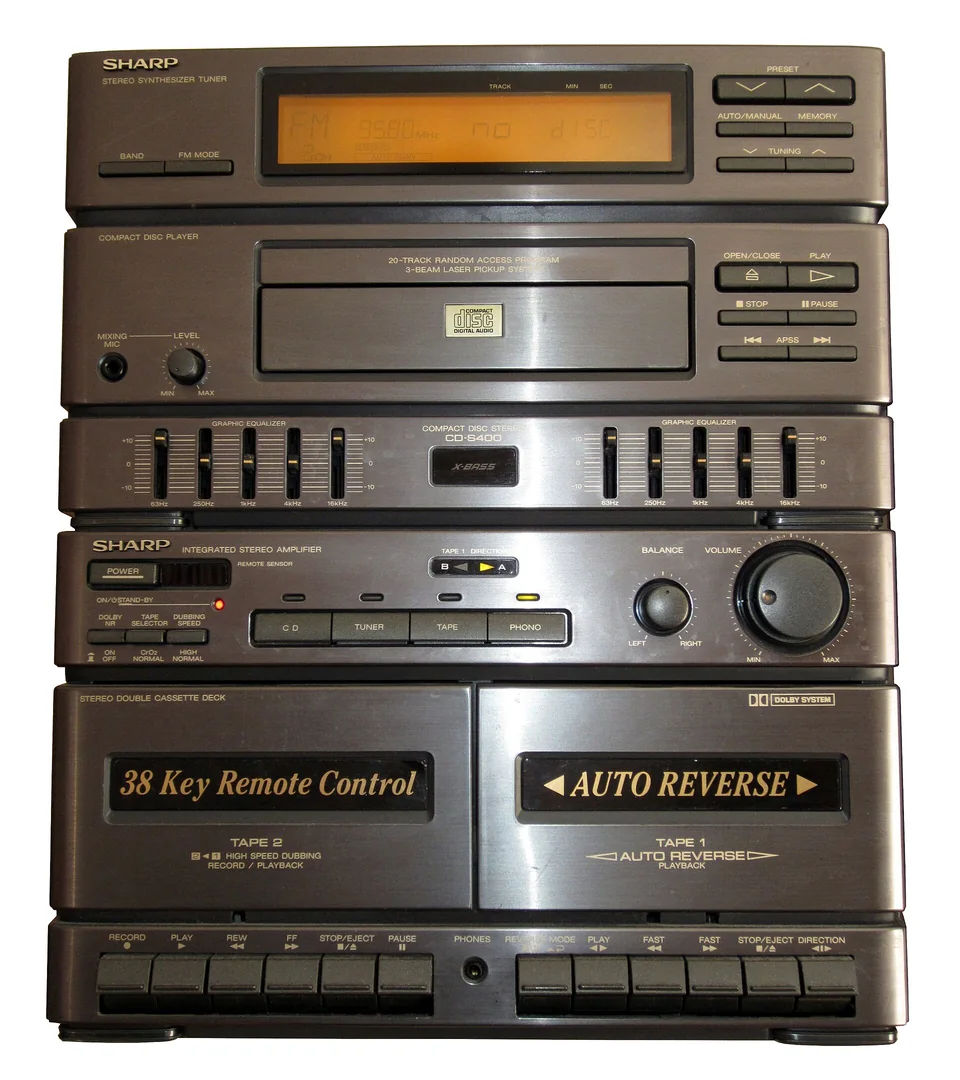
| Reference photograph | Visual context for a topic | Ownership, endorsement or hands-on testing by this website |
1.Turn an attractive claim into a precise question
A specification can be useful without being a verdict. Begin by identifying the property a claim describes: input support, acoustic response, electrical load, output capability or something else. Then ask what information would connect that property to the intended room and listening task. A large number without a defined job can be persuasive while remaining practically unhelpful.
This is the research method used for educational analysis at SOUND & ROOM. It does not claim an original laboratory test or a personal listening comparison. Published documentation, independent measurements and first-hand experience are different evidence types. Research is valuable when those boundaries remain visible, and less reliable when a document summary is written as though the author handled or measured the product.
2.Copy the conditions with the number
Record the unit, reference level, distance, frequency range, tolerance and configuration where relevant. Not every property needs every condition, but the comparison must identify the conditions that affect its meaning. A headline frequency range without a tolerance answers less than a clearly defined response statement.
For amplifier output, look for load, distortion criterion and channel conditions. For sensitivity, identify whether the excitation is specified as voltage or power. Do not convert incomplete descriptions into apparently precise equivalent measurements using assumptions that the source never established. An explicit unknown is a legitimate research result. It tells the reader what remains to be checked instead of hiding a gap behind an impressive table.
For a focused explanation of this connection, read Speaker Sensitivity and Impedance: Read the Numbers.
3.Compare methods before ranking results
Two values with the same unit may describe different procedures. A controlled-environment loudspeaker response and a listening-seat room measurement include different contributions. A maximum-output statement needs its own conditions. Sorting the largest number to the top before checking those differences can create a ranking that the evidence does not support.
Build the comparison around one shared question and align methods where possible. If alignment is impossible, describe the limitation rather than inventing a universal correction. A manufacturer document can establish an intended function, while an independently published measurement can add different evidence about behavior. Neither source type should automatically be treated as complete for every question merely because its presentation looks technical.
(1)An evidence checklist
- Identify who produced the information.
- Record the method and conditions where supplied.
- Separate documentation from measurement and listening experience.
- State what remains unknown.
- Avoid turning an incomplete comparison into a universal ranking.
4.Keep sensitivity, load and output capability distinct
Sensitivity describes an acoustic result under stated excitation and measurement conditions. Impedance describes an electrical load that varies with frequency, with a nominal value serving as a broad rating rather than a fixed resistance. Maximum useful output concerns limits such as distortion, compression or excursion under particular conditions.
Those concepts can inform one another, but they should not be collapsed into a single sound-quality score. A relatively high sensitivity does not independently establish deep-bass headroom. A nominal load label does not reveal every amplifier demand. Use the actual equipment guidance and more complete data where the intended use is demanding. The educational goal is to identify the next relevant question, not to turn one familiar specification into a prediction of every listening result.
5.Read a graph as a record of a method
Check both axes, display scale, smoothing and the stated measurement direction. A tightly expanded vertical axis can make a modest variation appear dramatic; a broad scale can make the same pattern look reassuringly flat. Analysis windows and spatial averaging can also affect what a trace shows.
Ask whether the graph depicts a measured response, a simulation, a target or a prediction after proposed processing. These are not interchangeable. A predicted correction is not a verification measurement, and an in-room curve does not isolate the loudspeaker from the environment. Preserve enough context for another reader to understand the observation. A screenshot without conditions should not gain authority simply because it contains a dense set of lines.
To investigate the next part of this question, see How to Read Speaker Frequency-Response Graphs.
6.Distinguish capability from suitability
An input-support table can establish compatibility while leaving daily operation unresolved. An output specification can establish useful capacity under its conditions while leaving coverage across a couch unanswered. A photograph may show physical connections without revealing their signal routing. These distinctions help prevent a technically true detail from being stretched into a much broader recommendation.
Define the real use case: source connections, channel roles, listening positions, level requirements and installation constraints. Then examine which evidence addresses each requirement. The result can be a suitable function map without a product ranking. Research-based comparisons are often most useful when they explain tradeoffs and missing information rather than forcing a winner between products designed for different jobs.
7.Use references without reproducing their prose
Read primary documentation for specific supported functions and clearly identify independent evidence where it is used. Write the explanation from the reader's problem and the reasoning it requires. Do not translate a source article paragraph by paragraph, combine copied passages or present another person's measured result as original work.
References should let a reader locate and check the relevant evidence. Attribution does not by itself grant permission to reproduce a photograph, graph or lengthy text. Visuals require their own applicable license or permission, and a citation should not imply endorsement. If an article needs a measured figure that cannot be lawfully reused, link to the source and explain the conclusion within the evidence's limits instead of redrawing it as a supposedly original result.
8.State what a conclusion does and does not establish
A useful conclusion connects the evidence to the original question. It might establish that a connection supports a needed format, that two ratings are not directly comparable or that a placement investigation should precede an equipment decision. It should preserve the relevant conditions and identify an inference as an inference.
Avoid invented listening experience, professional credentials, test results or commercial relationships. Uncertainty is not a reason to fill a table with confident guesses. A reader should be able to distinguish a documented fact from a practical hypothesis and understand what additional evidence would change the assessment. That makes the analysis easier to challenge, correct and improve.
9.Keep the research maintainable
Save source links, the details relied on and any material gaps. Recheck model-specific information when it changes, and distinguish substantive content revisions from cosmetic edits. Do not change a date merely to make an unchanged article appear newly researched. A correction should identify what was changed and why.
The final check is reader value. Can the article help someone ask a better question, avoid a mistaken comparison or make a more informed setup decision? If it only repeats a list of specifications without explaining their relevance, more words will not fix it. A focused analysis with clear evidence boundaries is a stronger foundation for trust than an unsupported ranking dressed in technical language.
10.Key terms and common questions
(1)Evidence vocabulary
- Test condition
- A circumstance or configuration under which a reported result was obtained.
- Inference
- A conclusion drawn from evidence rather than a directly reported observation.
- Uncertainty
- A recognized limit on what can be concluded from the information available.
(2)Research-based analysis, explained
Can research be useful without a hands-on test?
Yes, when the article accurately states its evidence, scope and limitations. It must not present document analysis as personal experience.
Does an independent article need to rank products?
No. It may be more useful to explain a technical difference, a missing test condition or a question the reader should investigate.
11.Technical references and editorial scope
Research-based educational guidance. Sources support fact checking; they are not text to reproduce. No original measurements or hands-on product test are claimed. Follow the instructions for your equipment. Our editorial and corrections policy.
Have a question or spotted a correction? Write to the editors ↗