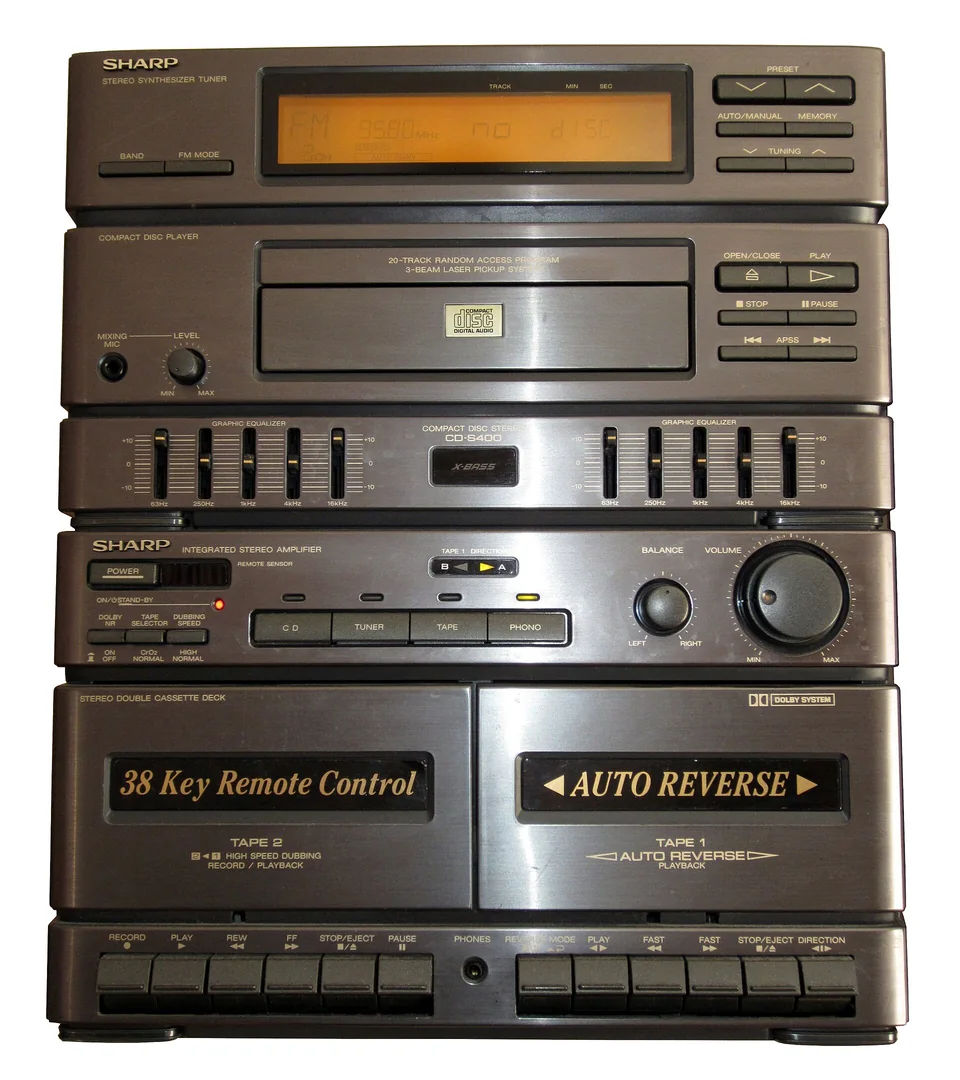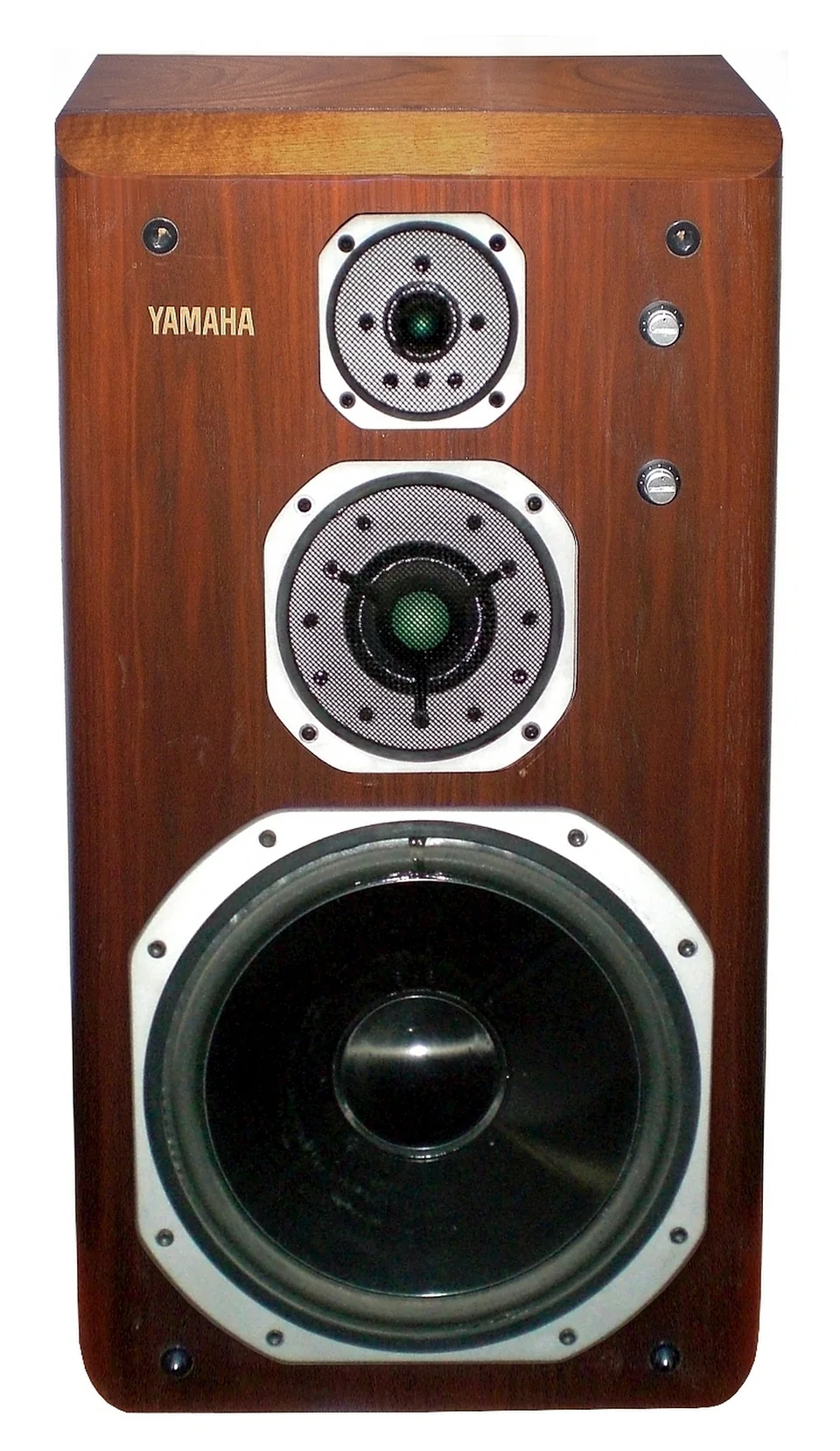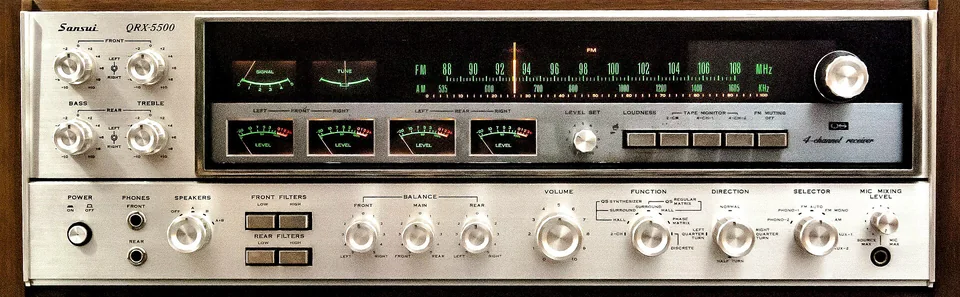
| Item or observation | What to investigate | Limit or caution |
|---|---|---|
| Sensitivity | Acoustic level under stated excitation and measurement conditions | Maximum clean output or overall quality |
| Nominal impedance | A broad classification of electrical load | The lowest impedance at every frequency |
| Power rating | A rating defined by a particular method | The power normally used or a guarantee of loudness |
1.Ask what was held constant
A sensitivity figure states an acoustic result for a specified electrical input and measurement arrangement. Without those conditions, two numbers may look comparable while answering different questions. The input may be described as a voltage or as power; the distance and frequency range may differ. Record the complete notation before interpreting a difference of a few decibels.
Impedance describes the electrical load presented to the amplifier, and a loudspeaker's impedance generally changes with frequency. A nominal value is useful for classification, but it is not a fixed resistor secretly installed inside the cabinet. The sensitivity figure and the load description belong together when considering amplifier demands. Neither is a direct score for tonal balance, imaging or listening enjoyment.
2.Why 2.83 volts and one watt are not always equivalent
For a purely resistive eight-ohm example, power equals voltage squared divided by resistance. Applying about 2.83 volts gives approximately one watt. Under the same simplified calculation, four ohms gives approximately two watts at that voltage. This arithmetic explains why a voltage-referenced specification should not automatically be read as a one-watt specification for every nominal load.
A real loudspeaker has frequency-dependent complex impedance, so that calculation is an educational illustration rather than a reconstruction of its measured power across a band. Do not “correct” a published sensitivity number with a casual nominal-impedance adjustment and declare the result a verified measurement. The responsible conclusion is that the reference conditions need to match before the acoustic figures are compared directly.
To connect load guidance with equipment functions, read Bookshelf vs Floorstanding Speakers: Which Fits Your Room?.
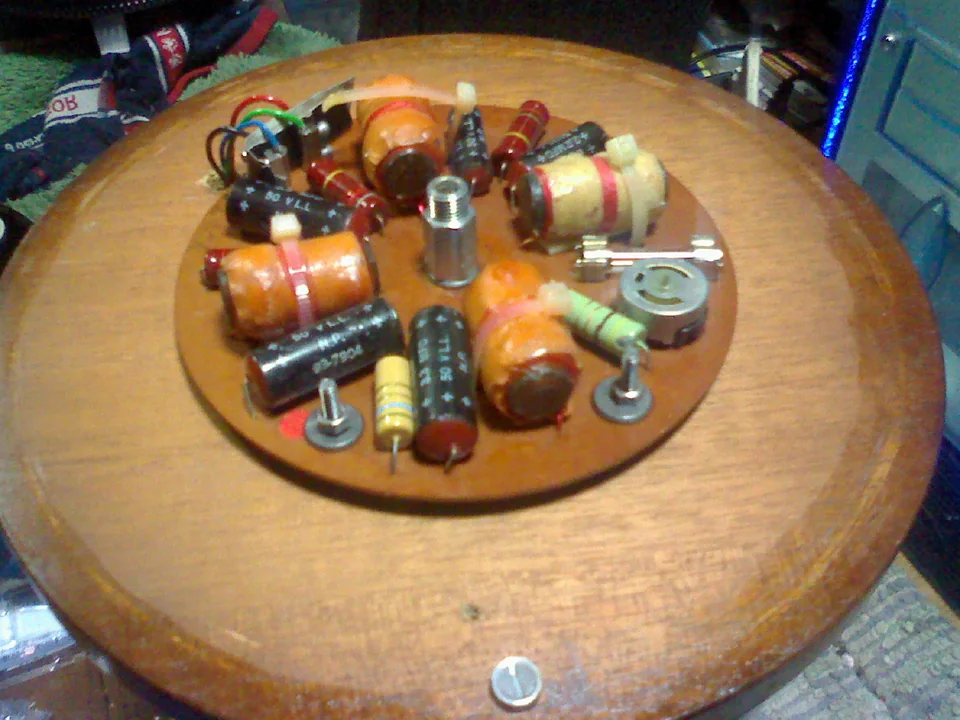
Shows loudspeaker drivers and a passive crossover; these are relevant to the distinction between acoustic sensitivity and electrical load. Reference photography, not a SOUND & ROOM test or measurement.
3.A nominal load does not reveal the whole challenge
Two speakers with the same nominal impedance can present different minima and different electrical phase behavior. Their demands on an amplifier can therefore differ. Published impedance and phase curves add context, particularly when the manufacturer supplies compatible amplifier guidance. If the relevant data are unavailable, preserve the uncertainty rather than assuming all products carrying one nominal label behave identically.
Also read the amplifier manual. Supported loads may depend on operating mode, channel count, wiring arrangement or other conditions. Parallel connections change the effective load and must not be improvised from a speaker's nominal label alone. Excess heat, protection shutdown or persistent distortion is a reason to stop and investigate, not to compensate by raising the volume or defeating protection.
(1)Checks to keep the comparison useful
- Copy the sensitivity reference, distance and tolerance.
- Distinguish nominal impedance from a minimum or a curve.
- Check amplifier load guidance in its manual.
- Keep output capability separate from sensitivity.
4.Sensitivity is not maximum output
A speaker that produces more acoustic output for a stated input may require less electrical drive for a particular level under comparable conditions. That does not establish how far it can go before distortion, compression or excursion becomes unacceptable. Driver limits, frequency, enclosure behavior and protection can all affect usable output.
The distinction matters when comparing a high-sensitivity speaker with limited deep-bass capability and a lower-sensitivity speaker designed for a different task. One printed number cannot decide which serves a particular listening distance and programme. Look for output-dependent measurements when the intended use is demanding, and separate low-frequency output from midrange sensitivity instead of assuming a single rating describes both.
5.Distance and room conditions complicate prediction
An acoustic reference measured at one distance does not state the exact level at every seat. Simple free-field calculations can illustrate how direct sound changes with distance, but a furnished room adds reflections and frequency-dependent behavior. A prediction should identify its assumptions rather than promising a precise domestic result.
Use such estimates to ask practical questions: is there ample margin, is the desired output unusually demanding, and is the seat much farther away than the rating distance? Do not treat the estimate as proof that a specific amplifier-speaker pair has been tested. A system used near a desk and one serving several distant seats can place very different demands on the same equipment.
6.Watt figures need the same scrutiny
An amplifier power specification needs its load, distortion criterion, channel configuration and other relevant test conditions. A loudspeaker power-handling figure needs its own method and signal conditions. The two ratings are not a pair of matching puzzle pieces that guarantee safe operation whenever the numbers coincide.
Clipping, excessive low-frequency excursion and prolonged high output can create problems even in a system whose labels look compatible. Follow the manufacturers' guidance and use equipment within its intended operating range. For an ordinary comparison, documenting missing conditions is more useful than calculating a false precision from incomplete ratings.
7.Build a comparison sheet with explicit unknowns
Create separate entries for sensitivity reference, impedance information, amplifier load guidance, response evidence and output evidence. Copy the units and conditions, not merely the largest number. If one maker gives a curve and another gives only a headline, label the information difference instead of treating the sparse specification as an equally complete description.
The result may support a cautious compatibility assessment without supporting a ranking. That is a successful research outcome. You have established what the numbers mean, identified what they cannot tell you and found the next document or measurement needed. An honest blank in the comparison is preferable to an invented conclusion about how a system will sound.
8.Key terms and common questions
(1)Terms used in this guide
- Voltage sensitivity
- Acoustic output for a stated applied voltage and measurement arrangement.
- Nominal impedance
- A descriptive load rating rather than a frequency-independent resistance.
(2)A question worth checking
Is a 4-ohm speaker automatically twice as loud?
No. Its acoustic output depends on design, applied signal and conditions. A simplified electrical calculation cannot establish the response or usable output of an actual loudspeaker.
9.Technical references and editorial scope
- KEF: example of voltage sensitivity and nominal/minimum impedance notation ↗
- Crown: how much amplifier power do I need? ↗
Research-based educational guidance. Sources support fact checking; they are not text to reproduce. No original measurements or hands-on product test are claimed. Follow the instructions for your equipment. Our editorial and corrections policy.
Have a question or spotted a correction? Write to the editors ↗