| Question | Acoustic treatment | Sound isolation |
|---|---|---|
| Primary concern | How sound behaves within a space | How sound passes between spaces |
| Typical observation | Reflections, liveliness or uneven listening positions | Audible sound in an adjacent room |
| What a soft furnishing proves | It may change some in-room behavior | It does not by itself establish useful isolation |
| How to begin | Describe the listening symptom and check placement | Identify the transmission problem and seek an appropriate building-level assessment |
1.Separate the room from the equipment label
The sound at a seat includes the loudspeaker's output and the way that output interacts with the surroundings. A room can change balance and clarity without any menu setting moving. That is why a response described for a loudspeaker under one measurement condition should not be assumed to appear unchanged at a couch.
Begin with an observation that can be repeated: speech loses definition in one seat, a particular bass note dominates, or the balance changes when the listener moves. Do not attach a cause immediately. A room effect, a source choice and a configuration error can produce confusingly similar first impressions. A useful acoustic investigation starts after basic routing is confirmed and keeps those possibilities distinguishable.
(1)Two complaints, two different goals
These are hypothetical examples used to distinguish questions, not reports of measured installations.
2.Understand direct and reflected contributions
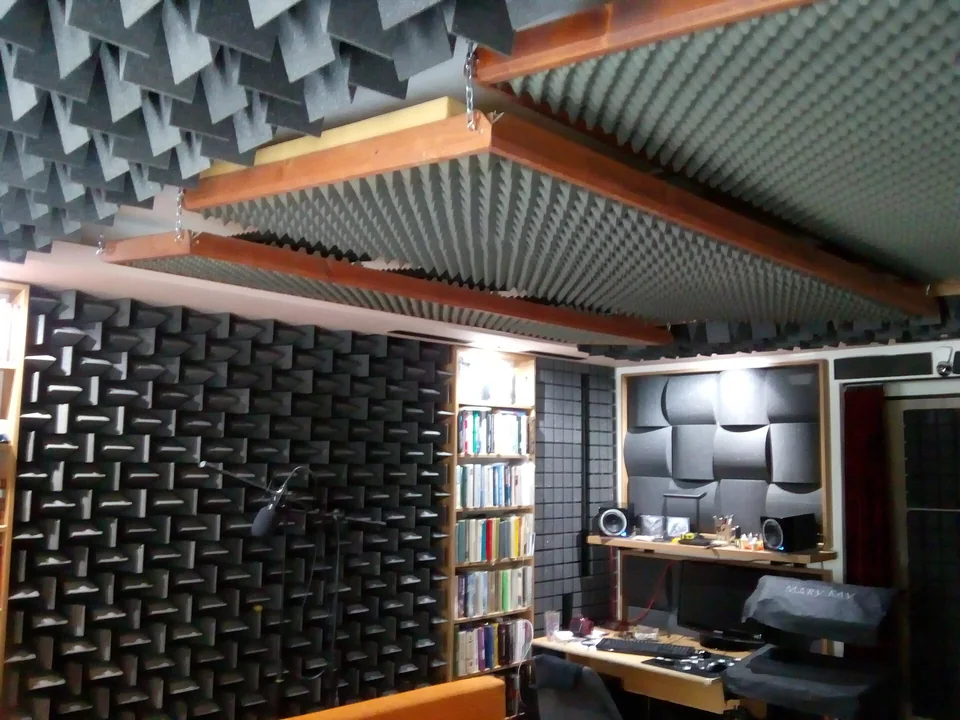
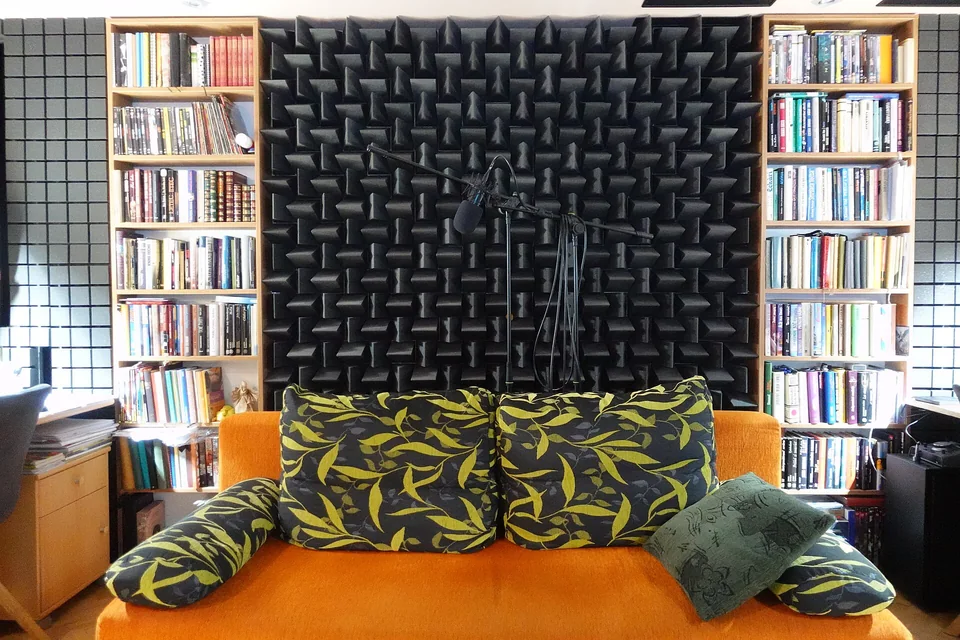
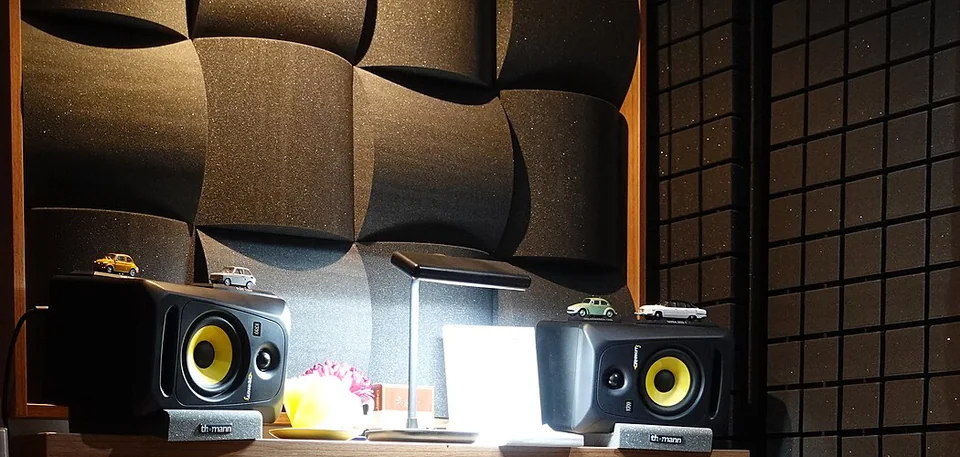
Sound traveling more directly from the loudspeaker arrives alongside contributions that follow paths involving room surfaces and objects. Their timing, direction and frequency content influence the listening result. A nearby tabletop, wall or floor can therefore belong in a placement discussion even when it appears acoustically unremarkable in a photograph.
This does not mean every reflection is undesirable or that the room should be covered indiscriminately. The intended use and actual behavior matter. A safe reversible comparison can help test a suspected path: change one relevant condition while keeping the speaker and seat fixed. Record the result and restore the original arrangement. If the difference is uncertain, treat it as uncertain rather than assigning a precise acoustic cause from appearance alone.
For a focused explanation of this connection, read Uneven Bass in a Room? A Step-by-Step Diagnosis Workbook.
3.Give low frequencies a spatial question
Bass can be strong at one position and weak nearby. Boundary conditions, room resonances and source relationships can create frequency-dependent spatial variation. A weak region at the main seat is therefore not automatically evidence that the speaker or subwoofer cannot produce that frequency usefully anywhere in the room.
Compare a small set of marked positions before increasing overall gain. Listen to varied notes at a steady comfortable level. If suitable measurements are available, preserve each position rather than looking only at an average. One seat's peak and another seat's dip can be hidden in a reassuring summary. The first goal is to describe the pattern across the intended listening area, because a uniform control change cannot independently give every location a different remedy.
4.Test source and listener positions separately
Moving the listener samples a different point in the sound field. Moving the source changes its relationship to the room. Both are useful investigations, but changing them simultaneously makes the result difficult to interpret. Mark an arrangement that can be recovered, then choose one variable for the comparison.
Respect safe supports, cable slack and circulation. A position that is acoustically promising but obstructs the household's use of the room is a diagnostic finding rather than a finished setup. A small permitted seat change can be particularly informative when moving a heavy source is difficult. Record what improved and what became less useful elsewhere. The result should explain a tradeoff rather than simply label the newest arrangement best.
5.Distinguish absorption from isolation
Treatment intended to influence sound inside the room and construction intended to reduce transmission to another space have different objectives. A panel that changes reflected sound does not automatically establish privacy next door. A soft support addressing one mechanical vibration path is not a complete barrier to airborne bass.
State where the problem is heard. If the complaint concerns the listening seat, investigate the source room. If it concerns a neighboring bedroom, observations in that receiving space and the building's transmission paths become relevant. Significant construction needs appropriate professional guidance. Keep ventilation and safe access intact. The label acoustic product is too broad to decide which objective a particular material can satisfy.
To investigate the next part of this question, see Acoustic Treatment vs Soundproofing: Solve the Right Problem.
6.Evaluate treatment with relevant evidence
Material thickness, mounting, area and frequency behavior affect treatment performance. A thin decorative absorber should not be assumed to address deep bass simply because both involve sound. Look for data describing relevant conditions, and connect the proposed treatment to an identified problem rather than to an empty wall that seems convenient.
Household furnishings can provide useful context and sometimes a reversible comparison, but a rug or bookcase is not automatically a documented broadband treatment or diffuser. Avoid interpreting a less lively high-frequency impression as proof that low-frequency behavior has also improved. A good treatment plan identifies the target, installation and verification method. Where the problem is complex or the requirements are demanding, an acoustician can assess details that a photograph or generic article cannot establish.
7.Understand the place of measurement and correction
A repeatable measurement can add useful information about response at a position and, with suitable analysis, behavior over time. It needs an understood signal path, appropriate microphone setup and recorded conditions. A graph without those details can create more certainty than the method supports.
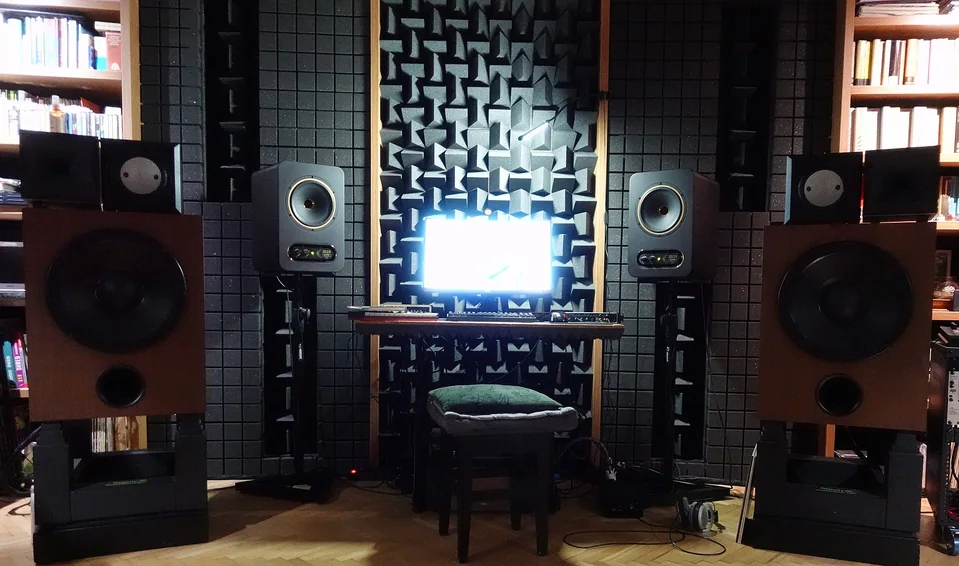
Equalization changes the signal applied to the system; it does not move the room boundaries or make all seats identical. Investigate large proposed boosts, particularly for position-dependent cancellations. After applying processing, verify the result rather than relying only on a predicted curve. Measurements and listening observations answer related questions, but neither should be presented as evidence of a test that did not occur. This guide provides a method for investigation, not measured results for the reference photographs.
8.Build a practical improvement sequence
Confirm routing, identify the intended seats, document a baseline and test a limited physical change. Use the outcome to decide whether the next question concerns placement, integration, treatment, correction or transmission. Keep each proposed intervention attached to a specific observation and a way to judge success.
Stop when the arrangement serves ordinary use reliably, or write a clear brief for further help if a significant problem remains. Save the positions, settings and any raw measurement project. A room does not need identical response at every possible point to be useful. The value of this process is a recoverable configuration and a defensible explanation of what changed, giving future equipment or building decisions a concrete job instead of an undefined promise.
9.Key terms and common questions
(1)Describe the room problem
- Name the symptom in plain language.
- Check whether it changes with seat position.
- Separate sound inside the room from sound transmitted elsewhere.
- Record the baseline before making a reversible change.
(2)Room questions in context
Will adding soft material solve every bass problem?
That conclusion is not justified by appearance alone. Describe the frequency and position dependence, then evaluate an appropriate intervention.
Can calibration replace placement?
Calibration and placement address overlapping but different constraints. A correction system should not be a reason to ignore the physical arrangement.
10.Technical references and editorial scope
Research-based educational guidance. Sources support fact checking; they are not text to reproduce. No original measurements or hands-on product test are claimed. Follow the instructions for your equipment. Our editorial and corrections policy.
Have a question or spotted a correction? Write to the editors ↗