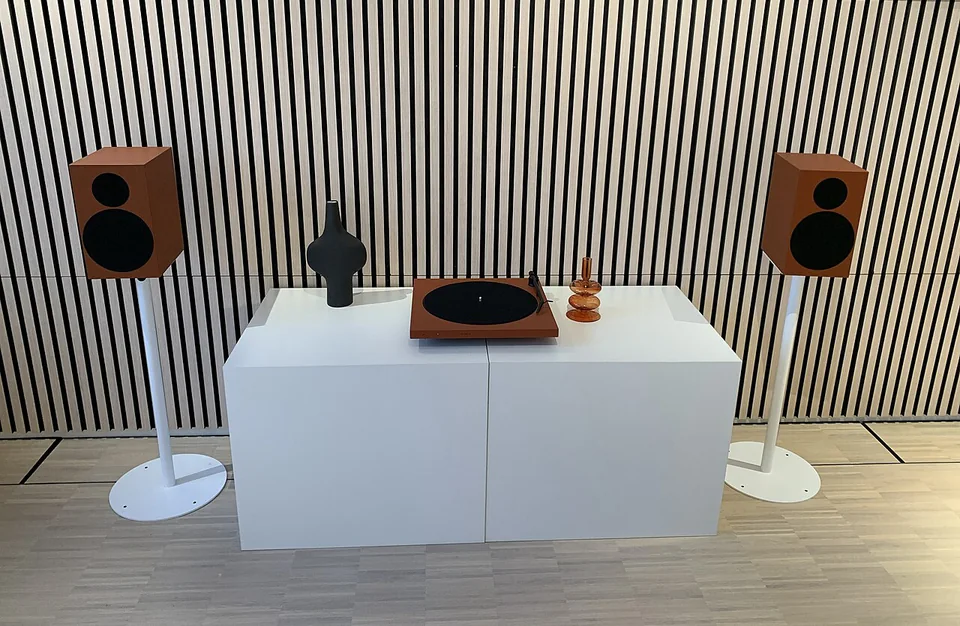
A compact shared living room
The couch, dining passage and console remain in daily use. Compare reversible changes within those constraints rather than designing an unusable ideal room. This is an illustrative scenario, not a reported test.
1.Draw the room people actually use
Consider a compact shared living room with a couch, a media console, a dining passage and no option to create a dedicated listening zone. This is a hypothetical planning exercise. Its first task is not to find the ideal speaker in a catalogue; it is to identify where an audio system can operate without making the room inconvenient.
Draw doors, windows, seating, walking routes and fixed furniture. Mark power sockets and any safe cable paths. Separate genuine constraints from habits: a large cabinet may be immovable, while a decorative table might have another useful position. The sketch turns a vague complaint about a small room into a set of specific choices that can be tested.
2.Choose an honest listening priority
A single listener seeking a stable stereo image and a household using the whole couch are asking different things of the same space. Decide whether the main goal is focused music listening, clear television dialogue, consistent background listening or a compromise. That choice affects which seat deserves emphasis and what counts as an acceptable tradeoff.
Do not calibrate the entire system for a spot nobody normally occupies. Mark a real head position at seated height and include the other important seats in evaluation. If the arrangement changes between work and evening use, document those modes. A practical system can serve more than one situation, but it needs a deliberate priority instead of a fictional permanently perfect seat.
For the separate source-location question, use Speaker Toe-In: Find a Better Angle for Your Listening Area.
(1)Checks to keep the comparison useful
- Mark doors, walking routes and non-movable furniture.
- Measure the complete speaker and support footprint.
- Choose a primary listening area rather than an imaginary perfect point.
- Keep an original arrangement that can be restored.
3.Make the speaker arrangement intentional
Start with secure supports and a clear path to listeners. Check the manufacturer's orientation and boundary-clearance guidance. If speakers sit on a console, nearby surfaces and the console's dimensions become part of the installation. Moving the cabinets a small permitted amount may be more informative than assuming that a new amplifier will fix an undefined lack of clarity.
Measure the left and right relationships to the main seat. Perfect architectural symmetry may be impossible, but accidental differences can still be corrected. Compare spacing or angle one variable at a time, keeping an original marked arrangement. Avoid pushing furniture into a walkway to obtain a textbook triangle that the household cannot live with.
(1)A practical decision path
- 1
Define the task
Begin with actual room use, safe supports and a defined listening area. Keep physical, electrical and transmission problems as separate questions.
- 2
Check the distinction
Couch cannot move far: Test small safe offsets before ruling out seat changes: Document nearby seat differences
- 3
Preserve the evidence
Keep an original arrangement that can be restored.
4.Give bass its own investigation
Small rooms do not necessarily have too much or too little bass everywhere. They can have strong variations by frequency and position. A couch near a boundary may experience a different balance from a chair a short distance away. One weak note at the primary seat does not automatically mean the speaker lacks bass extension.
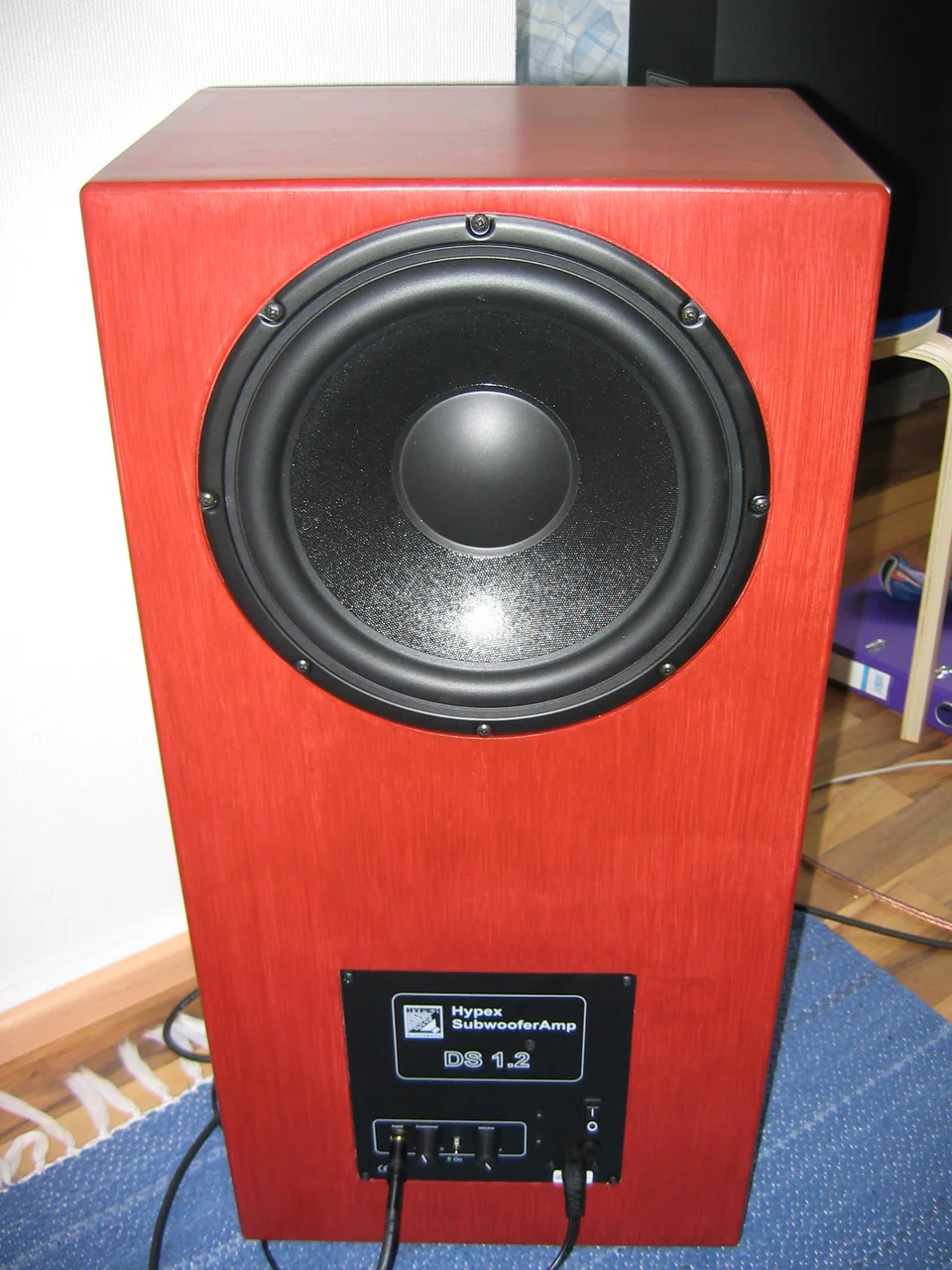
Compare nearby positions with the same material and level. If practical, make a modest seat shift before changing equipment. Where a subwoofer exists, evaluate a few safe locations rather than only its appearance beside the console. Keep location testing separate from final timing and level adjustments so that the result can be explained. More bass output is not the same as a more even listening area.
5.Use furniture as context, not as a magic treatment
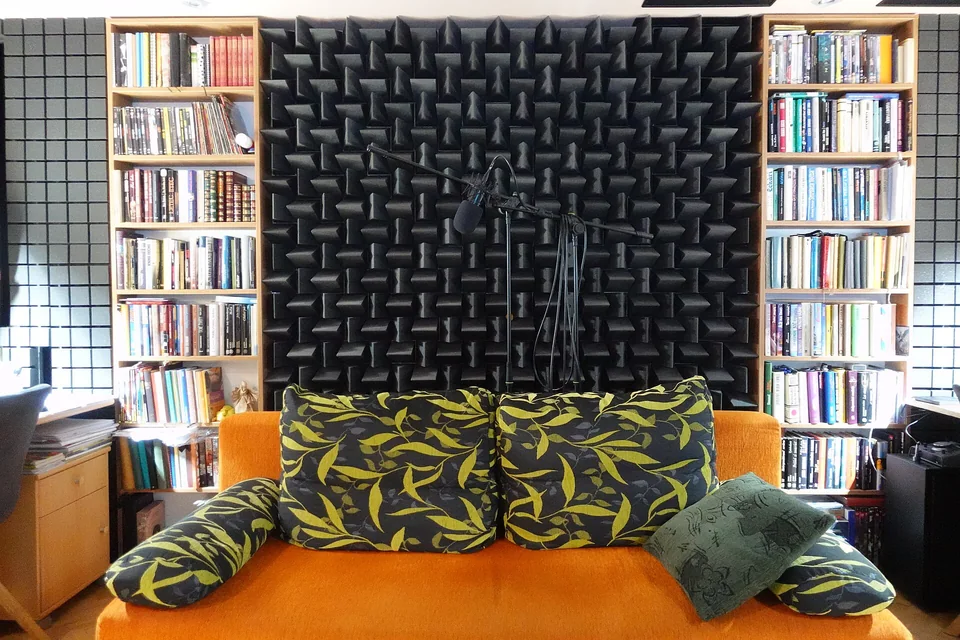
Rugs, curtains, upholstery and shelves can influence aspects of a room's reflected sound, but their effects are frequency-dependent and installation-specific. A rug may address a particular reflective path while doing little for deep bass. A full bookcase is not automatically a tested diffuser simply because its surface looks irregular.
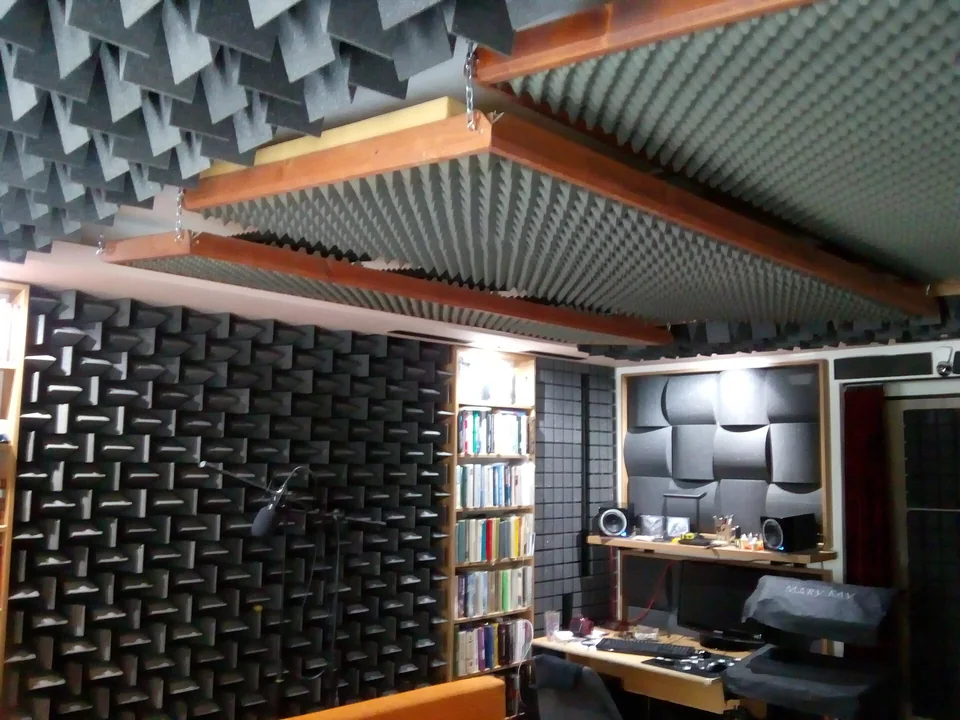
A safe temporary comparison can help identify whether a particular surface deserves attention. Keep the loudspeaker and seat positions unchanged while testing it. If an improvement is repeatable, investigate suitable permanent treatment with documented properties. Avoid covering the room indiscriminately: an unevenly damped room can still have unresolved low-frequency problems and may become less pleasant for ordinary conversation.
6.Separate room quality from neighbor disturbance
If late-night sound transmission is the household concern, inside-room treatment may address the wrong objective. Listen in the receiving space where possible and agree on a practical operating level. Deep bass, mechanical rattles and airborne transmission are not automatically one problem with one accessory solution.
Headphones, lower listening levels or a separate quiet-time preset may provide an immediate practical answer. Any building work should be based on the actual construction and transmission paths. Do not mistake a calmer-sounding living room for proof of improved isolation. The source room and the neighboring space need separate observations.
7.Finish with a small number of kept changes
Keep the changes whose benefits survived a return comparison: a clearer path from speaker to seat, a modest angle adjustment, a better bass position or a more useful everyday listening level. Save a sketch and a few notes rather than relying on memory. If a difference was unclear, restoring the simpler arrangement is sensible.
Only then list unresolved requirements. Perhaps the system lacks a needed input, cannot cover the couch adequately or reaches its output limit. Those are concrete equipment questions. A small-room plan succeeds when it separates them from placement and room effects, giving any later change a specific job instead of asking a purchase to solve every uncertainty at once.
8.Key terms and common questions
| Item or observation | What to investigate | Limit or caution |
|---|---|---|
| Couch cannot move far | Test small safe offsets before ruling out seat changes | Document nearby seat differences |
| Speakers share a console | Check support and unobstructed output | Avoid assuming symmetry in a photograph is enough |
| Late-night listening matters | Plan level and bass preferences separately | Room treatment alone does not establish isolation |
(1)A question worth checking
Does a small room always need the smallest speakers?
No universal size rule follows from floor area alone. Required output, placement, bass strategy and the complete footprint matter more than a cabinet-size slogan.
9.Technical references and editorial scope
Research-based educational guidance. Sources support fact checking; they are not text to reproduce. No original measurements or hands-on product test are claimed. Follow the instructions for your equipment. Our editorial and corrections policy.
Have a question or spotted a correction? Write to the editors ↗