| Item or observation | What to investigate | Limit or caution |
|---|---|---|
| Treatment | Changes reflections and decay within a space | Guaranteed privacy in the next room |
| Isolation | Reduces transmission between spaces | A preferred listening balance inside the room |
| Vibration control | Addresses a specific mechanical transmission path | Complete control of airborne bass |
1.Begin with a sentence about the symptom
“The room needs acoustics” is too broad to guide a useful intervention. “Speech sounds blurred at the couch” concerns the listening environment. “Bass is audible in the bedroom above” concerns transmission to another space. The same room can have both problems, but they need separate evidence and may require different work.
Write where the listener is, what is heard and when it happens. A short observation from the receiving room can be more useful than a catalogue of panels. Keep quiet-time agreements and practical volume management in place while investigating. No treatment photograph can establish how a particular building transmits sound.
(1)A bedroom next door
A quieter-sounding source room does not prove better isolation. Observe the receiving space separately and assess the actual transmission paths. This is an illustrative scenario, not a reported test.
2.Treatment changes what happens within the room
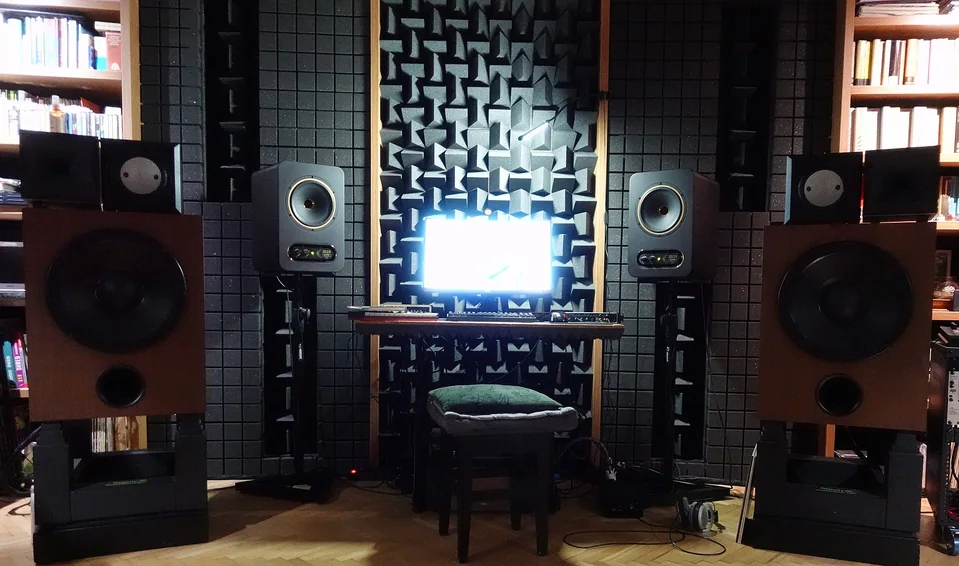
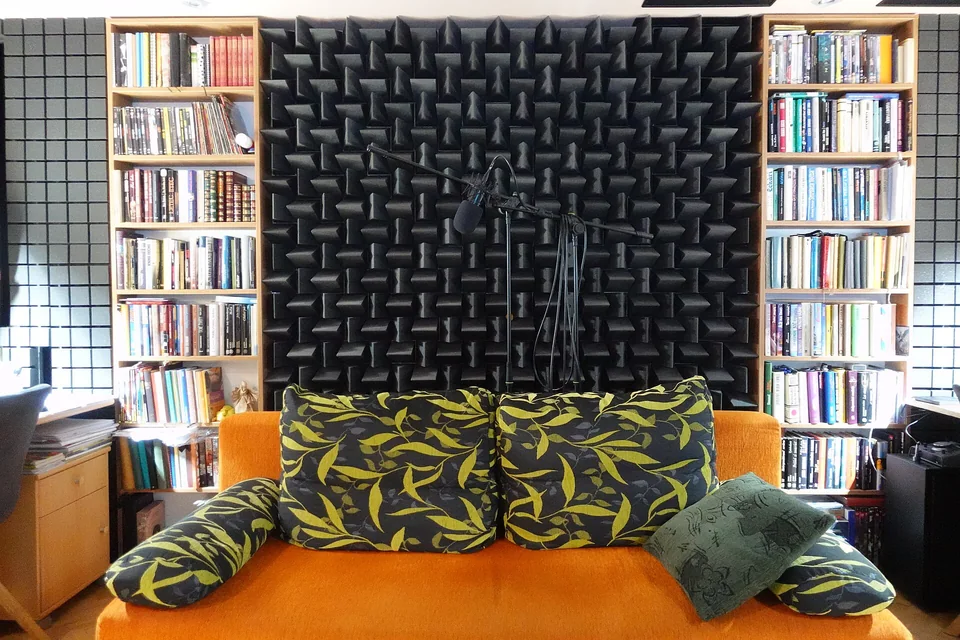
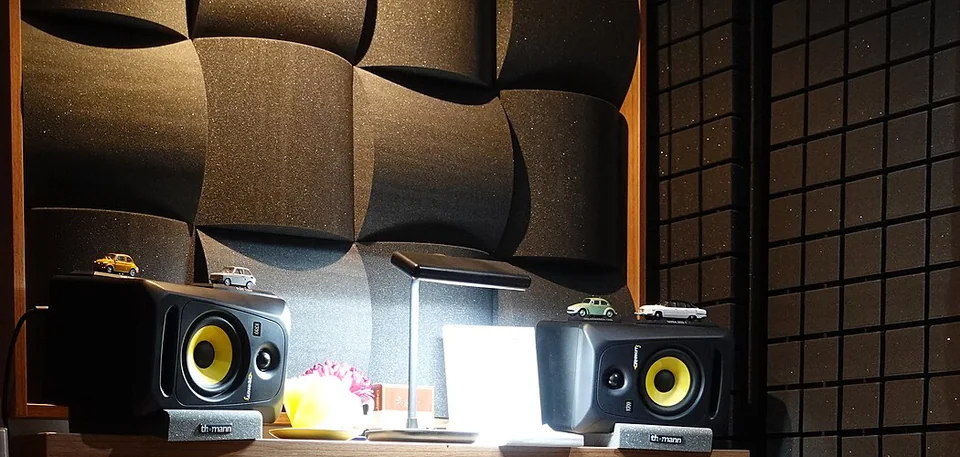
Sound reflects from boundaries and objects, and suitable treatment can change aspects of those reflections and decay. Its effect depends on frequency, material, thickness, mounting and location. A product that absorbs useful high-frequency energy may do much less at low frequencies. The surface area and installation conditions matter as well as the material name.
That is why “acoustic panel” is not a complete technical specification. Look for absorption data and the conditions under which it was obtained. Identify the listening problem before deciding where treatment belongs. Covering every visible wall because a room sounds bright can create an unbalanced result while leaving low-frequency variation unresolved.
For a practical shared-room plan, continue with Uneven Bass in a Room? A Step-by-Step Diagnosis Workbook.
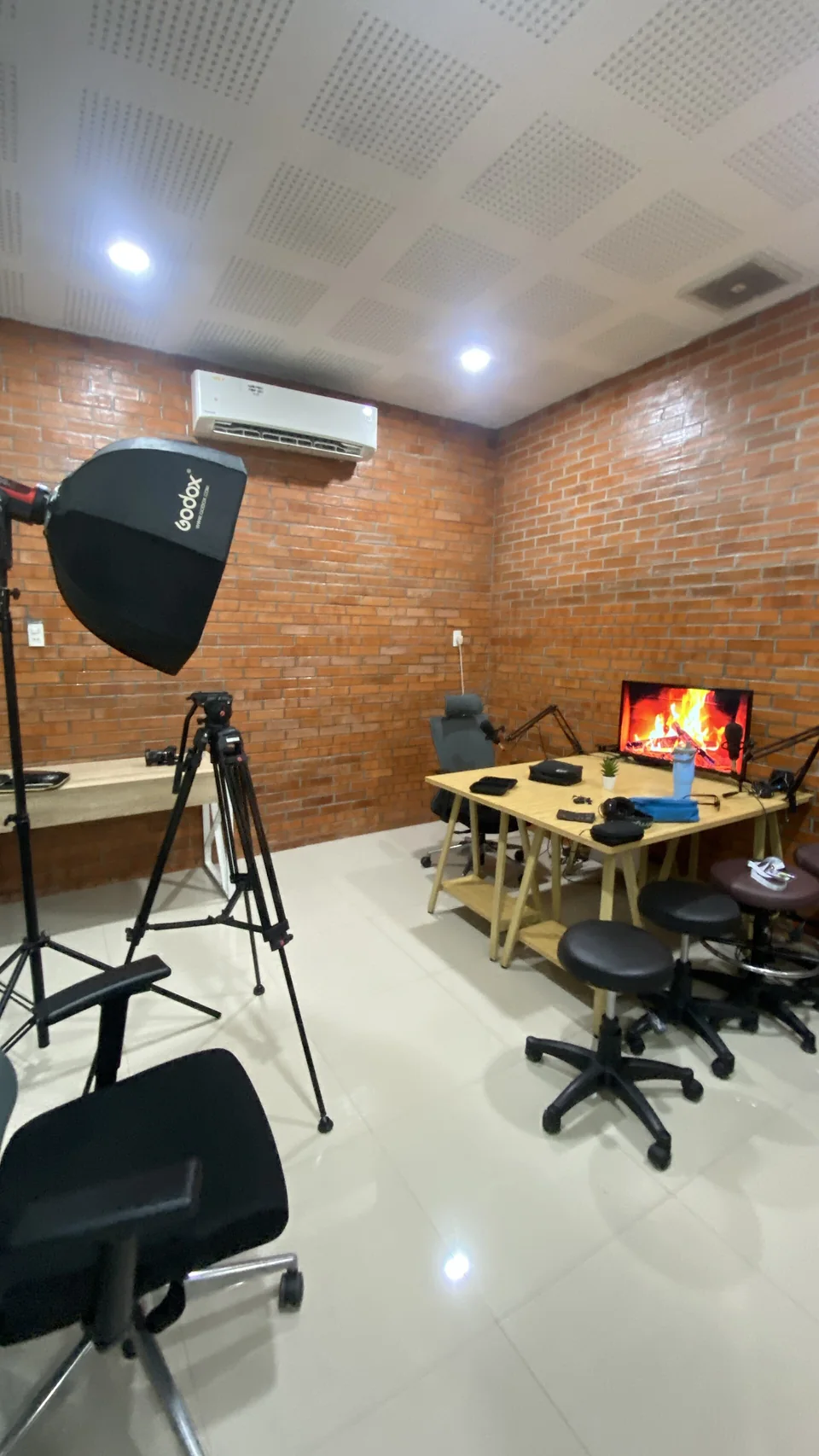
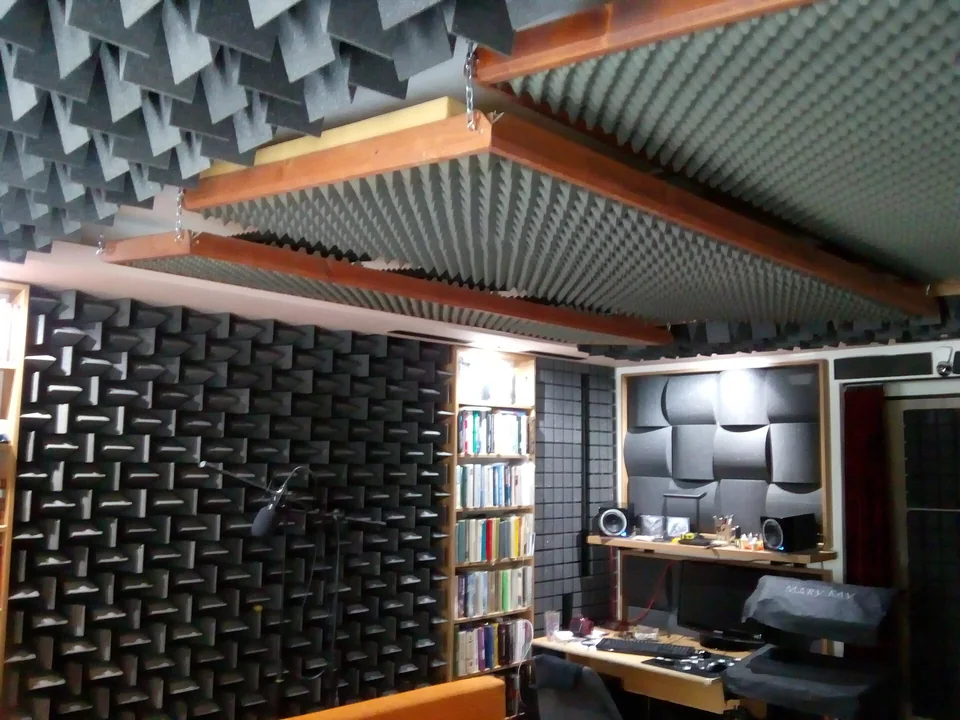
Shows ceiling absorption and room treatment; these do not establish sound isolation through walls. Reference photography, not a SOUND & ROOM test or measurement.
3.Isolation concerns the complete transmission path
Sound can travel through partitions, openings, doors, ventilation routes and connected structures. Improving one visible surface may leave another path dominant. A small gap can matter for some airborne transmission problems, while low-frequency control can involve substantial construction challenges. The actual building must guide the assessment.
This is different from choosing a fabric color or hanging a lightweight absorber. Structural changes require appropriate professional design and compliance with local building requirements. Do not block ventilation, emergency routes or necessary services in an attempt to seal a room. An isolation plan has to preserve the building's safe operation as well as address sound.
4.Bass makes simple promises especially unreliable
Low-frequency sound can be difficult to contain, and the receiving room may emphasize particular notes through its own behavior. A subwoofer sounding balanced in the source room does not establish that adjacent spaces are quiet. Likewise, a rattling object in another room does not prove that every audible component arrived through the floor.
Compare observations carefully: does the problem track deep sustained notes, change with source position or persist when a particular object is stabilized? These clues can help define the investigation without proving a transmission mechanism. Do not assume that placing a soft mat beneath a subwoofer will eliminate airborne bass transmission through the building.
5.Mechanical contact is one question among several
A vibrating cabinet or support can excite a mechanical path. Suitable isolation products may help with particular vibration problems when selected and used appropriately. Their performance depends on load, stiffness, installation and frequency; a generic pad is not a universal acoustic barrier.
Separate direct rattles from broader audible sound. A loose cabinet door can sometimes be fixed as a local maintenance issue while bass remains audible elsewhere. That is a useful partial result, but it should be described accurately. Solving a rattle does not demonstrate that the building is now soundproof, just as reducing room reverberation does not demonstrate improved privacy.
6.Use reversible changes to test a narrow hypothesis
For an inside-room reflection question, a safe temporary change to a reflective surface can reveal whether that path deserves more study. For a transmission problem, a controlled comparison of source level, source position and observations in the receiving space can help define the complaint. Keep the programme and comparison conditions consistent.
Temporary household materials are diagnostic tools with limitations, not certified replacements for an engineered installation. Keep them clear of heat sources and circulation. Record what changed and what did not. If the result is uncertain, do not translate it into a large shopping list. More information about the room or building may be needed first.
7.Decide whether the next step is operational or structural
Some immediate improvements are changes in use: lower bass level, a different listening time, headphones for late sessions or a more suitable room. These choices can be more effective for the immediate household problem than buying treatment aimed at a different goal. They do not imply that a future construction solution is impossible.
If significant isolation is required, define a target with a qualified specialist who can inspect the actual transmission paths and constraints. If listening quality is the problem, develop a treatment plan from evidence about response and decay. Keeping those objectives separate protects both the budget and the result: you can judge whether the chosen work solves the problem it was actually designed to address.
8.Key terms and common questions
(1)Checks to keep the comparison useful
- Describe whether the problem is inside-room listening or transmission.
- Identify airborne and structure-related paths separately.
- Do not infer low-frequency absorption from appearance.
- Keep doors, ventilation and fire safety in the plan.
(2)A question worth checking
Can thin decorative foam stop a subwoofer disturbing neighbors?
It should not be assumed to provide useful bass isolation. The transmission paths and building construction must be assessed; lowering level or changing listening arrangements may be the immediate practical option.
9.Technical references and editorial scope
Research-based educational guidance. Sources support fact checking; they are not text to reproduce. No original measurements or hands-on product test are claimed. Follow the instructions for your equipment. Our editorial and corrections policy.
Have a question or spotted a correction? Write to the editors ↗